18 Types of Penguins With Pictures and Key Differences
Every living penguin species is flightless, but their size, crests, markings, climate, and range vary sharply.
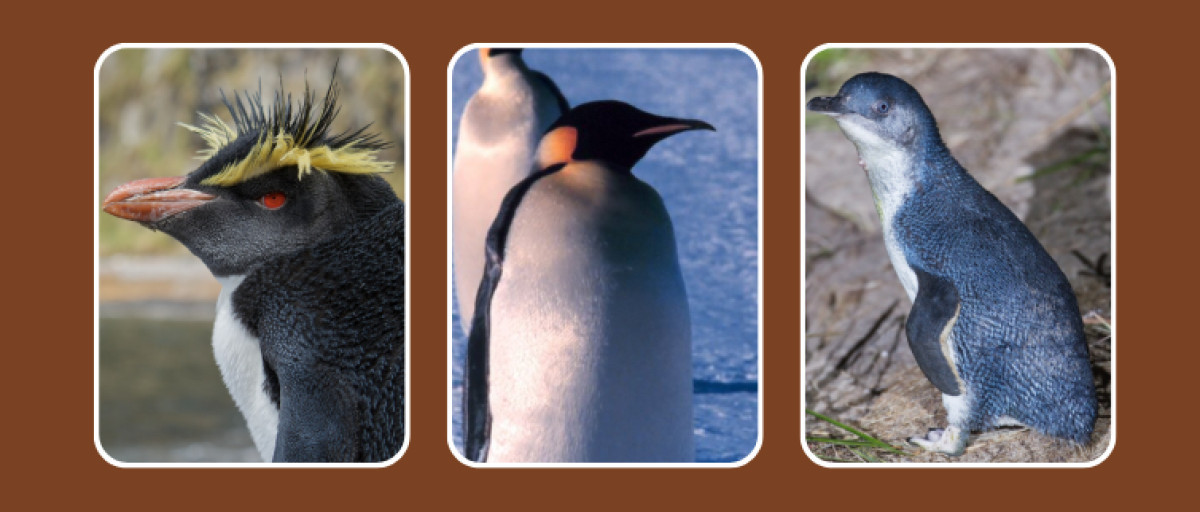
It starts like every other penguin spotting mission, with high hopes and a vague plan, then the birds show up and suddenly nothing feels simple. One minute you’re staring at a lineup of black-and-white silhouettes, the next minute you’re trying to figure out whether that “pretty crested head” belongs to a macaroni, a royal, or a rockhopper.
Now add the real-world complication: the article you’re using is basically a speedrun of clues, size first, then crests, then face patterns, then chest bands, and finally location. That order matters, because a chinstrap’s thin chin line can look similar to other markings, and a broad white head stripe can steal the spotlight before you even notice the orange-red bill.
By the time you reach the first five species, you’ll realize the fastest way to get it wrong is to skip one key detail.
How to Identify Penguin Species
- Check size first. Emperor and king penguins tower over little penguins.
- Look for yellow or orange crests. Macaroni, royal, rockhopper, Snares, Fiordland, and erect-crested penguins belong to the crested group.
- Use face patterns. Chinstraps have a thin black line, while gentoos have a broad white head stripe.
- Check the chest. African, Humboldt, Magellanic, and Galápagos penguins carry dark breast bands.
- Confirm location. Range is often more reliable than small plumage differences.
All 18 Types of Penguins
List:
1. Emperor Penguin
Emperor penguins are the largest penguins. Adults have black heads, white bellies, and yellow-orange patches on the neck. They breed during the Antarctic winter on sea ice, where males incubate a single egg on their feet.
Penguins use calls, posture, pebbles, and nest sites during courtship and breeding. A viral video of a penguin pair walking together captured social behavior, but a single affectionate-looking moment should not be treated as a complete account of pair bonding.
 commons.wikimedia.org
2. King Penguin
King penguins resemble smaller, brighter emperors. Their orange ear patches are sharply defined, and orange coloring extends along the lower bill. They breed on subantarctic islands rather than the Antarctic sea ice used by emperors.
 commons.wikimedia.org
3. Adélie Penguin
Adélies have classic black-and-white plumage, short bills, and a clear white ring around each eye. They breed around Antarctica and nearby islands. The compact body and plain head distinguish them from chinstrap and gentoo penguins.
 commons.wikimedia.org
4. Chinstrap Penguin
A narrow black line under the face gives the chinstrap penguin its name. It has a white face, black cap, and dark bill. Large colonies occupy rocky ice-free coasts around the Antarctic region.
 commons.wikimedia.org
5. Gentoo Penguin
Gentoos have broad white stripes running over the top of the head, bright orange-red bills, and orange feet. They are the third-largest penguins and powerful underwater swimmers.
Their feeding areas can contain drifting types of jellyfish, although penguins mainly pursue fish, krill, and squid.
Zoo and aquarium stories can make individual birds familiar. The long partnership of Sphen and Magic became widely known, while a monthly naughty penguin board showed individual behavior within a colony.
 commons.wikimedia.org
6. Little Penguin
Little penguins are the smallest species. Their upperparts are blue-gray rather than black, and the bill is short and dark. They nest around southern Australia and New Zealand, often returning to colonies after dark.
 commons.wikimedia.org
7. African Penguin
African penguins have one black chest band, spotted white underparts, and patches of pink skin above the eyes. They breed along the coasts of South Africa and Namibia. Their loud braying call inspired the older name jackass penguin.
 commons.wikimedia.org
8. Humboldt Penguin
Humboldt penguins also have a single chest band, but they live along the Pacific coasts of Peru and Chile. A broad pale-pink area around the bill helps separate them from African penguins.
 commons.wikimedia.org
9. Magellanic Penguin
Magellanic penguins show two dark bands across the chest and neck. They nest along southern South America and migrate north outside the breeding season. The double band is the clearest feature.
 commons.wikimedia.org
This is similar to the monkeys with tiny tree-dwellers, grassland runners, leaf-eaters, and powerful primates.
10. Galápagos Penguin
The Galápagos penguin is the only penguin that regularly lives near the equator. It resembles a small banded penguin, with a thin white line around the face and one dark chest band. Cool currents make survival possible in the tropical island chain.
 commons.wikimedia.org
11. Yellow-Eyed Penguin
Yellow-eyed penguins have pale yellow eyes and a yellow band running around the back of the head. Adults have mottled gray heads rather than solid black caps. They breed in New Zealand and nearby islands.
 commons.wikimedia.org
12. Fiordland Penguin
Fiordland penguins are crested penguins from southwestern New Zealand. Yellow eyebrow feathers sweep backward, and small white streaks often mark the cheeks. They nest in dense coastal forest and rocky caves.
 commons.wikimedia.org
13. Snares Penguin
Snares penguins breed only on the Snares Islands south of New Zealand. They have thick yellow crests, red-orange bills, and pink feet. The restricted range is the best identification clue.
Some nesting coasts and surrounding seas also support types of turtles, but the overlap varies sharply by region.
 commons.wikimedia.org
14. Erect-Crested Penguin
Erect-crested penguins carry stiff yellow eyebrow feathers that point upward rather than drooping. They breed on remote New Zealand subantarctic islands. Outside the breeding colonies, they remain poorly studied.
 commons.wikimedia.org
15. Macaroni Penguin
Macaroni penguins have broad orange-yellow crests that meet on the forehead. Their red-brown bills are heavy, and the face is black. The extravagant crest inspired a name linked to flamboyant eighteenth-century fashion.
 commons.wikimedia.org
16. Royal Penguin
Royal penguins resemble macaronis but usually have white or pale faces. They breed only on Macquarie Island. Some taxonomies have debated whether they are a distinct species or a form of macaroni penguin.
 commons.wikimedia.org
17. Southern Rockhopper Penguin
Southern rockhoppers are small crested penguins with red eyes, orange bills, and thin yellow plumes. They move across rocky colonies by hopping, which explains the name. They breed on several southern ocean islands.
 commons.wikimedia.org
18. Northern Rockhopper Penguin
Northern rockhoppers have longer, more luxuriant crest feathers than southern rockhoppers. They breed farther north on islands including Tristan da Cunha and Gough. Geographic separation and crest shape support the split.
 commons.wikimedia.org
The moment you compare emperor and king penguins, the size difference does the heavy lifting, and the rest of the clues start to feel less chaotic.
Then you hit the crested group names like macaroni and rockhopper, and you realize those yellow or orange head details are the first thing your eyes should lock onto.
When you get to chinstrap versus gentoo, the face patterns turn into the whole game, that thin black chin line versus the broad white head stripe.
Right as you reach the chest check for African, Humboldt, Magellanic, and Galápagos penguins, you remember that location can save you when the plumage tricks you.
Penguins That Are Commonly Confused
Emperor and king penguins differ in size, breeding habitat, and color pattern. African, Humboldt, Magellanic, and Galápagos penguins form another difficult group, but chest bands and range solve most cases.
Crested penguins require closer attention. Face color, crest direction, bill size, and island location matter more than the simple presence of yellow feathers.
Rare Penguin Colors
Abnormal pigmentation can hide standard field marks. A yellow penguin photographed in South Georgia lacked the usual dark pattern, but its body shape and colony location still pointed toward a king penguin.
Lighting produces smaller errors. Wet feathers appear darker, chicks wear different coats, and molting adults may look uneven or swollen.
Where Penguin Species Live
Penguins are southern birds, but Antarctica holds only part of their diversity. African penguins live beside warm continental coasts, Galápagos penguins reach the equator, and several crested species breed on remote temperate islands.
The Smithsonian Ocean penguin overview explains how wings became flippers and how dense feathers support life at sea. Penguins still depend on land or ice for breeding, making coastal conditions central to survival.
Pelagic birds have specialized ways to handle salt, and an explanation of seabird salt glands adds useful context for penguins that spend much of their lives feeding in seawater.
First identify the region. Then count the bands, check the head, and look for a crest.
For penguins, geography is often the strongest field mark.
If you rush the clues, you’ll end up arguing about the wrong penguin for the rest of the page.
Want more bird spotting drama, check out the owl types with ear tufts, heart-shaped faces, and haunting calls.

Damjan