Unknown Shark Species Discovered Deep Within the World’s Longest Cave
The real standout detail lies in its teeth.

Deep inside Mammoth Cave, scientists didn’t just find another ancient bone. They pulled up evidence of a totally new extinct shark species, Macadens olsoni, hiding where most people would never think to look.
The complication is that this cave is already famous for its geology, so the discovery adds a whole new layer to a place people thought they understood. Superintendent Barclay Trimble is celebrating what it means for ancient marine ecosystems, while the research team is also re-examining older fossils, including the specimen once labeled Helodus coxanus.
And then the teeth hit, because the “wheel tooth” name Rotuladens comes from a shape so distinct it basically tells its own story.
The real standout detail lies in its teeth.
 National Park Service
When Superintendent Barclay Trimble starts talking about connecting the past to the present, Mammoth Cave suddenly sounds less like a tourist stop and more like a time capsule with teeth.
"This discovery is a remarkable addition to our understanding of ancient marine life and underscores the importance of preserving and studying our natural history," Superintendent Barclay Trimble said.
"This finding not only enhances our knowledge of ancient marine ecosystems but also emphasizes the critical role of paleontological research in our national parks," he added. "Every discovery connects the past with the present and offers invaluable educational opportunities for students and the public."
The revelation of Macadens olsoni, a newly identified extinct shark species residing within the depths of Mammoth Cave, ignites a profound sense of excitement and curiosity among scientists and the public alike. This discovery is not merely an academic triumph; it taps into our inherent novelty-seeking behavior, a psychological trait that compels us to explore the unknown. The cave, already known for its geological wonders, now adds a unique biological facet that challenges our understanding of aquatic life in ancient ecosystems. This finding underscores a fundamental aspect of human nature—the drive to pursue knowledge and unravel the mysteries of our world, particularly those hidden in unexpected places.
In a remarkable paleontological breakthrough, scientists have identified a previously unknown species of extinct shark hidden deep within Mammoth Cave in Kentucky, the world’s longest known cave system.
That’s when the team’s revisit of the Helodus coxanus fossil turns into a plot twist, because it leads to a whole new identity: Rotuladens.
This deep-cave find hits different after researchers spotted a colossal, prehistoric-looking shark near the New England coast.
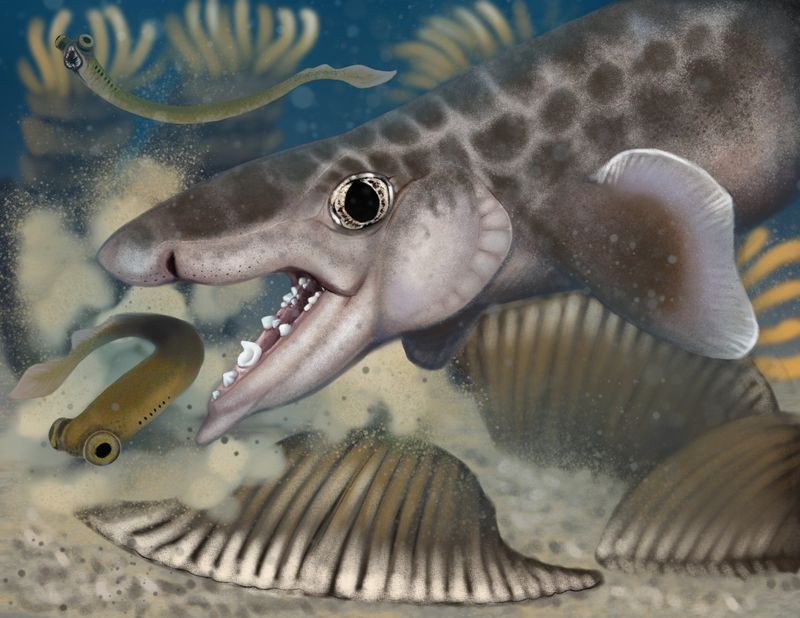
In addition to Macadens olsoni, the research team revisited another fossil specimen previously classified as Helodus coxanus. After careful analysis, the species was renamed Rotuladens, which means “wheel tooth” in Latin, a reference to the distinct shape of its teeth. Both species reveal unique adaptations, giving scientists a clearer picture of the diversity of prehistoric marine life that once inhabited the waters covering what is now Kentucky.
The cave’s deepest mystery gets even weirder as Macadens olsoni shows up alongside Rotuladens, proving these ancient waters had more variety than anyone expected.
Mammoth Cave, already a geological wonder, is proving to be just as extraordinary for what it hides beneath its limestone passages. These discoveries add to a growing body of evidence that the cave’s ancient formations preserve a rich archive of life from Earth’s deep past.
Furthermore, our fascination with sharks, in particular, may stem from a psychological phenomenon known as 'fearful fascination.' This concept highlights the complex relationship between fear and attraction, particularly in the context of creatures like sharks.
And once you learn what “wheel tooth” actually refers to, the discovery stops being abstract and starts feeling like a clue left behind by something that lived, hunted, and vanished.
The discovery of the new shark species Macadens olsoni in Mammoth Cave highlights an intriguing relationship between fear and fascination. Sharks, creatures often linked with trepidation, naturally capture the public's imagination. The unveiling of this extinct species not only stirs excitement but also deepens our understanding of prehistoric life. The cave's mysterious depths serve as a backdrop for this revelation, amplifying the intrigue surrounding the unknown. This newfound knowledge invites both awe and curiosity, prompting a closer examination of our planet's ancient ecosystems.
In reflecting on the discovery of Macadens olsoni, we witness a potent interplay of curiosity and trepidation that often accompanies groundbreaking scientific revelations. The identification of this extinct shark species not only ignites our fascination with the natural world but also reveals how fear can enhance our pursuit of knowledge. The depths of Mammoth Cave, where this shark was found, serve as a metaphor for the unknown challenges that researchers face. As we confront our anxieties about what lies beyond our understanding, this discovery exemplifies how such fears can propel us toward deeper inquiry and exploration. The unveiling of Macadens olsoni encourages us to embrace the unknown, highlighting the psychological motivations that fuel our relentless quest for discovery.
Those sharks weren’t just swimming in ancient Kentucky, they were waiting in the dark for someone to finally notice the teeth.
Want the teeth story too? See how scientists found a foot-long ancient shark in Kentucky.

Damjan