12 Spiky Animals Armed With Quills, Spines, and Serious Defenses
Quills, spines, venomous rays, and thorny armor give these spiky animals some of the most effective defenses in nature.
It started with a simple question, are quills, spines, and spikes the same thing? Because once you start noticing them, you realize these defenses are not one shared invention. They’re a bunch of different solutions, built by different animals, under different rules.
Now picture the messy part: porcupines lift their quills before anything even bites, hedgehogs curl up so their face disappears, and echidnas wedge themselves into tight hiding spots so a predator gets a face full of spines, not a meal. Even the “spiky” look can be a total misread, since some structures detach easily and others are meant to stay put.
And that’s where this gets fun, because the same threat can produce wildly different armor.
Are quills, spines, and spikes the same thing?
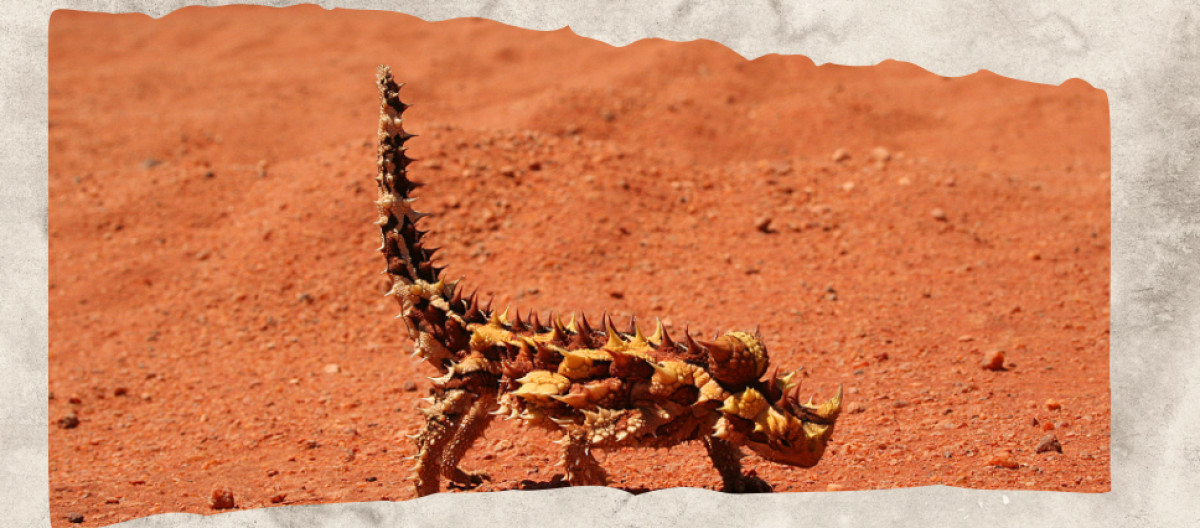
Not exactly. Porcupine quills are modified hairs. Sea urchin spines are movable structures attached to a hard internal skeleton. A thorny devil’s spikes are part of its scaled skin, while lionfish fin spines are associated with venom glands.
That matters because the animals did not inherit one universal “spike” design. Similar defensive pressures produced very different structures in mammals, reptiles, fish, and invertebrates.
The effect can be dramatic enough to define the whole species, much like the head shapes of animals with horns.
1. Porcupine
Porcupines are the classic quilled mammals. Their quills lie relatively flat when the animal is calm and become much more threatening when a porcupine raises them in defense.
The defense works best before a predator commits to a bite, because a threatening outline can discourage contact without the animal having to fight.
They do not shoot quills. Contact is the problem. A dog’s painful encounter with a porcupine can leave the face full of embedded quills, as happened to one Labrador after a porcupine run-in.
 commons.wikimedia.org
2. Hedgehog
Hedgehogs carry thousands of short spines across the back and sides. When threatened, they can curl tightly so the vulnerable face and belly disappear inside a prickly ball. Their defensive armor looks very different during ordinary daily life, as these pet hedgehog photos make clear.
Not all spines are equally rigid or sharp, and the material they are made from differs widely between mammals, reptiles, fish, and invertebrates.
Simple. Effective.
Unlike porcupine quills, hedgehog spines are not designed to detach easily after contact. The defense works by creating a hard-to-bite surface.
 commons.wikimedia.org
3. Echidna
Echidnas are egg-laying mammals covered with coarse hair and strong spines. If danger approaches, an echidna can curl, wedge itself into a hiding place, or dig down so that a predator is left facing mostly spines.
Some species can raise or angle their spines, making the body appear larger and turning a passive covering into an active defensive display.
Even young echidnas look unusual before the full armor develops. Pupperish covered an abandoned echidna puggle whose appearance was far softer than the adult version.
 commons.wikimedia.org
4. Sea urchin
A sea urchin is essentially a hard body surrounded by movable spines. Those spines help deter predators and can also assist with movement and protection from the environment.
Others rely on fixed structures that protect vulnerable surfaces simply by making the animal difficult to grasp or swallow.
Some species have long needle-like spines, while others carry shorter, denser ones. Either way, grabbing one is a terrible plan.
 commons.wikimedia.org
5. Thorny devil
The thorny devil is an Australian lizard covered in pointed scales that break up its outline and make the animal look difficult to attack. The spikes are part armor, part visual bluff, and part camouflage on a body colored to match dry ground.
The same visual strategy can therefore range from a mild deterrent to a genuinely dangerous weapon depending on the species.
Its strange surface also channels water between scales toward the mouth, giving the lizard another adaptation hidden inside that prickly appearance.
 commons.wikimedia.org
6. Porcupinefish
Porcupinefish can inflate their bodies when threatened, pushing long spines outward and turning a normally manageable fish into a much larger, more awkward object to swallow.
Spines also come with trade-offs, since heavy or rigid structures can affect movement and require the rest of the body to work around them.
It is one of the clearest examples of a defense that changes on demand. A diver’s repeated encounters with a porcupine fish show the less dramatic side of an animal most people know for its emergency mode.
 commons.wikimedia.org
That’s the same kind of “head weapon” idea as markhor horns turning turns into serious hardware, plus the African buffalo’s boss-level headgear.
7. Lionfish
Lionfish combine long flowing fins, bold stripes, and venomous spines. The spines make physical contact risky, while the striped pattern adds another strong visual signal.
In a few animals, the points carry venom or toxins, which adds a chemical defense to the mechanical problem of getting past the spine itself.
That overlap is why some species fit more than one appearance category. Lionfish could sit among animals with stripes, but the venomous spines are the feature with real consequences for anything that gets too close.
 commons.wikimedia.org
8. Crown-of-thorns starfish
The crown-of-thorns starfish is a large coral-eating sea star covered in long venomous spines. Its name is unusually accurate: viewed from above, the animal looks like a circular mass of thorns with arms underneath.
Camouflage can work alongside the armor too, especially when an irregular outline makes the animal resemble branches, rocks, coral, or rough vegetation.
Those spines are not decorative. They are a serious deterrent to many potential predators and can cause painful injuries to people who handle the animal carelessly.
 commons.wikimedia.org
9. Spiny bush viper
The spiny bush viper has strongly keeled scales that project outward, giving the snake a rough, almost bristled surface. Around the head and neck, the effect can look especially dramatic.
The repeated evolution of spiny bodies is striking because the underlying anatomy can be completely different even when the silhouette looks similar.
The snake is already venomous, so the spiky texture is not its only line of defense. It does, however, make the animal look unlike the smooth-scaled snake most people picture first.
 commons.wikimedia.org
10. Spiny mouse
Spiny mice have stiff, bristle-like hairs on the back that give them a rougher coat than an ordinary mouse. Their skin is also unusually fragile and can tear away when grabbed, a defense that may help an animal escape a predator.
A predator does not need to understand the anatomy. It only needs to learn that biting, swallowing, or handling the animal is likely to be costly.
Not every spiky animal is covered in giant points. Sometimes the texture only becomes obvious when you look closely.
 commons.wikimedia.org
11. Thorny seahorse
Thorny seahorses carry small spines and projections along the body, which can help break up their outline among complex underwater vegetation and reef structures. On an already strange body plan, the extra points make the seahorse look even more sculpted.
That makes spines an efficient form of protection for species that cannot rely on speed or large body size to escape every threat.
Some animals with spots use pattern to disrupt the outline instead. The goal can be similar even when the visual tool is completely different.
 commons.wikimedia.org
12. Spiny-tailed iguana
Spiny-tailed iguanas get their name from rows of pointed scales along the tail. The tail is muscular and can be used defensively, so the spikes add another unpleasant feature for a predator trying to grab from behind.
Across the list, the common theme is deterrence: each animal changes the physical consequences of being touched, bitten, or swallowed.
Spiny mammals can also show unexpected color variation. A rare white porcupine looks dramatically different from the dark animals people expect, even though the underlying quilled defense is the same.
For an even stranger combination, the lowland streaked tenrec mixes stripes with specialized spines; Animal Diversity Web’s overview of tenrecs helps show how diverse that mammal family is. The lowland streaked tenrec already has a dedicated Pupperish story, so it does not need another full entry here.
 commons.wikimedia.org
That porcupine moment, where a Labrador shows up with a face full of embedded quills, is the perfect reminder that “spike” is not one design.
Then hedgehog day-to-day photos show how their thousands of short spines look harmless until the instant they curl into a prickly ball.
After that, echidnas bring their own twist, coarse hair plus strong spines, with the added move of digging or wedging into a hiding place.
By the time you connect these defenses back to the animals’ different bodies, the whole “same thing” idea starts to fall apart.
Spikes evolved again and again for a reason
A hedgehog, lionfish, sea urchin, and thorny devil are separated by enormous evolutionary distances, yet each carries hard pointed structures that change how predators interact with it.
That is convergent problem-solving in a very visible form. If biting, grabbing, or swallowing you becomes painful enough, looking prickly can be a highly successful way to stay alive.
The next time you see something spiky, you’ll wonder what kind of trouble it was built to stop.
Want more “spines” surprises, like hedgehogs’ strange scent ritual and hibernation? Read these 30 fun facts about hedgehogs from spines to hibernation.

Damjan