The Oldest Dog Ever Lived 29 Years, and the Record Just Got Taken Back From a Challenger
For a few months a Portuguese dog named Bobi was crowned the oldest ever at 31. Then Guinness investigated and gave the title back to a dog that died in 1939.
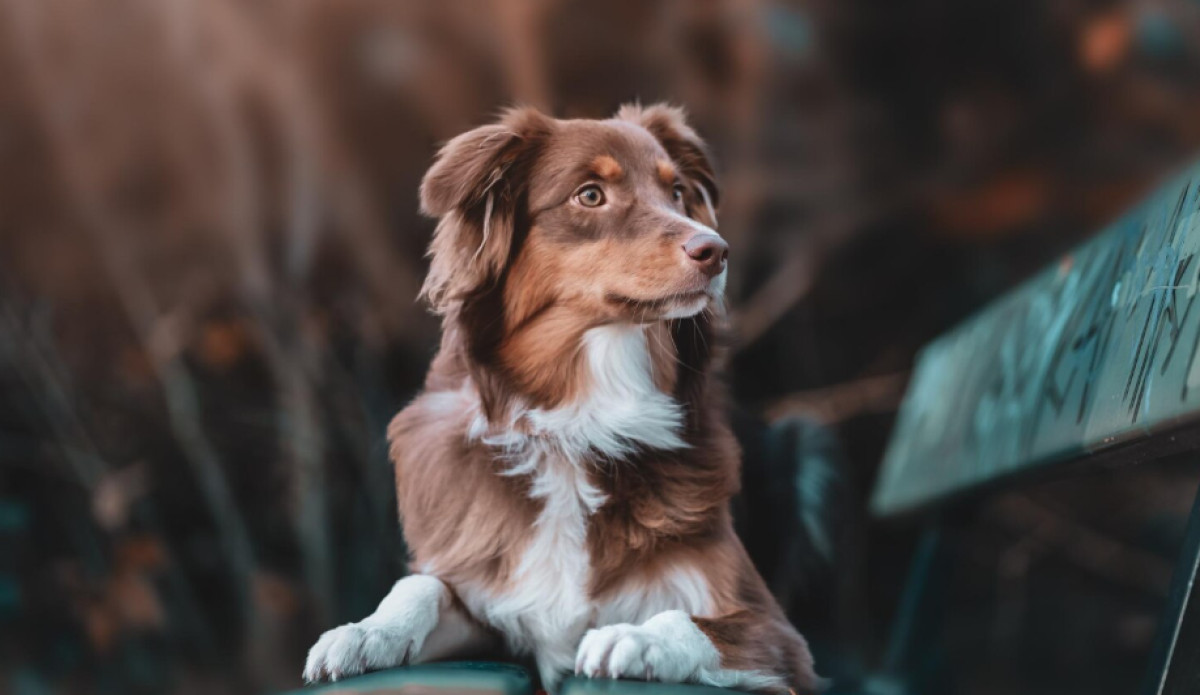
Bobi was supposed to be the dog that finally made everyone gasp, 31 years on the record, the kind of longevity story that spreads faster than any tail wag. Then Guinness pulled the plug in early 2024, and the title quietly slid back to the previous holder like a crown being returned to the right head.
But this is where it gets messy. Bobi was a Rafeiro do Alentejo, a Portuguese livestock-guardian breed that usually lives around 12 to 14 years, so the claim was already a stretch. The proof came from a pet database that did not require age verification for dogs born before 2008, and the microchip trail did not settle the question, leaving the record in limbo.
Meanwhile, Bluey, an Australian Cattle Dog who lived 29 years and 5 months from 1910 to 1939, stayed the dog people actually knew, the one the Hall family of Rochester, Victoria, watched work cattle and sheep for nearly two decades.
The Oldest Dog Ever
After Bobi was stripped of his record in early 2024, the title of oldest dog ever reverted to its previous holder, where it had sat for more than 80 years.
That dog was Bluey, an Australian Cattle Dog. Bluey lived 29 years and 5 months, from 1910 to 1939, and her age was confirmed through veterinary records. She was owned by the Hall family of Rochester, Victoria, in Australia, and she earned her longevity the hard way, working among cattle and sheep for nearly two decades before she was finally put to sleep in 1939. In a small town where the whole community knew her, her death was genuinely mourned.
Bluey held the record for an astonishing length of time, from 1939 all the way until Bobi briefly displaced her in 2023. For most of a century, no verified dog came close to her 29 years. That alone tells you how exceptional canine longevity past the late twenties really is. Most dogs, even long-lived ones, do not see 20.
 commons.wikimedia.org
Bobi’s 31-year claim had everyone leaning in, right until the Guinness review started poking at the Portuguese pet database used for the birthdate.
Why Bobi Lost the Title
Bobi's story was beautiful, which is part of why people wanted to believe it. The problem was the evidence. Bobi was a Rafeiro do Alentejo, a Portuguese livestock-guardian breed that typically lives just 12 to 14 years.
His claimed age of 31 would have made him an outlier of almost impossible proportions, roughly 220 in human-equivalent years. After his death, veterinarians and other experts publicly raised doubts, and Guinness World Records launched a formal review into how his age had been verified.
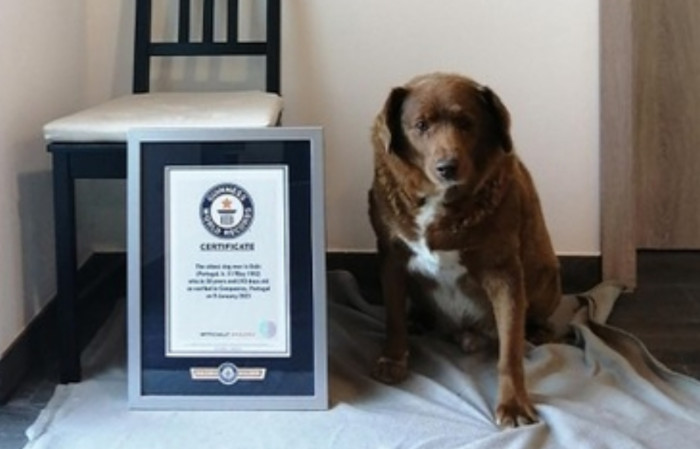
The review found a hole. The main evidence for Bobi's birthdate came from a Portuguese pet database, and that database did not require proof of age for dogs born before 2008. His microchip data, which had been treated as the central proof, turned out to be inconclusive.
In February 2024, Guinness announced it could no longer support the record. As its director of records put it, without conclusive evidence, the organization could not honestly keep Bobi as the holder and maintain its standards.
It was not an accusation that anyone had lied. It was an admission that the proof simply was not strong enough. The case prompted Guinness to tighten its rules, now requiring documentary evidence for every year of a dog's life, plus vet and witness statements and microchip data where available. Extraordinary claims, it turns out, demand extraordinary paperwork.
The Challengers That Never Got Verified
Bobi was not the first dog to challenge Bluey, just the first to briefly win. Over the decades, several dogs have been claimed to rival or beat her, and none could be verified.
The most tantalizing is Chilla, an Australian Cattle Dog and Labrador cross said to have lived 32 years and a few days before dying in the 1980s. If true, Chilla would have beaten Bluey outright. But the age was never certified by Guinness, so it remains an unconfirmed legend.
Other names, dogs called Max, Maggie, and Bella among them, have surfaced over the years with owners claiming ages in the high twenties or beyond, and in every case the documentation fell short of the standard. The pattern is consistent: the older the claim, the harder it is to prove, because nobody thinks to gather a lifetime of paperwork for a puppy that turns out to live for three decades.
This is the quiet difficulty behind every longevity record. The dogs that live long enough to break records were rarely treated as record candidates when they were born. By the time anyone realizes the animal is extraordinary, the early evidence is long gone.
 commons.wikimedia.org
That database mattered because it did not require proof for dogs born before 2008, which is exactly why Bobi’s timeline started to feel shaky.
Before you scroll, check out the dog that beats a cheetah and other “fake” facts that are real.
When Guinness said the microchip data was inconclusive, the record did not just get questioned, it got taken back from Bobi for good.
The Oldest Living Dog Right Now
If the "oldest ever" title is settled, the "oldest living dog" title is murkier, and at the moment, officially vacant. Before the Bobi controversy, the oldest living dog recognized by Guinness was Spike, a Chihuahua mix from Ohio, who held the title in early 2023 at around 23 years old.
After Guinness tightened its standards and revoked Bobi's record, it declined to immediately confirm a new oldest living dog, saying it would wait until it had ironclad evidence. The organization openly hoped the publicity would encourage owners of very old dogs to come forward with proper documentation.
This is the quiet aftermath of the Bobi affair. Having been burned once, Guinness is now far more cautious, and as a result there is a strange gap where a record holder usually sits. Plenty of dogs around the world are claimed by their owners to be 20 or older, but a claim is not proof, and proof is exactly what the last few years taught everyone to demand.
Why Some Dogs Live So Long
What separates a dog that reaches 12 from one that reaches 20-something? A few patterns hold up, even if individual cases always surprise us.
Size is the big one, and it runs opposite to what you might expect. Among dogs, smaller breeds generally live longer than large ones. A Chihuahua or a small terrier routinely outlives a Great Dane or a mastiff by many years, which is why so many longevity record holders are little dogs.
The reasons are still studied, but large breeds appear to age faster and are more prone to the cancers and joint problems that shorten life. Interestingly, both Bluey and several other longevity claimants were Australian Cattle Dogs, which prompted researchers to study whether that hardy working breed might have unusual staying power.
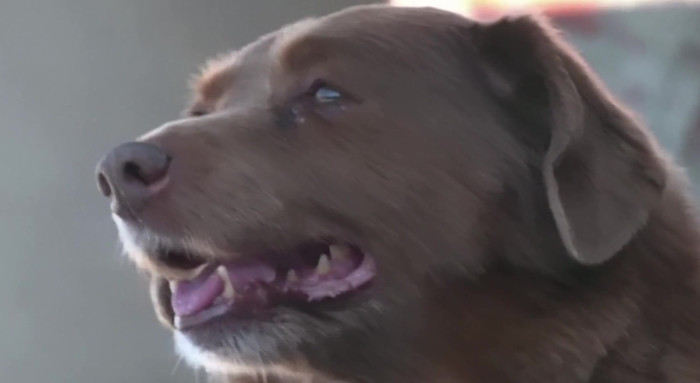
Lifestyle plays a role too. Bobi's owner credited his diet of home-cooked human food and a calm, free-roaming environment, never chained or leashed. Bluey worked hard outdoors for twenty years. There is no single formula, but a lean body, steady activity, low stress, and good veterinary care consistently show up in the stories of dogs that beat the odds.
Dog longevity follows the same broad logic as longevity across the animal kingdom, where lifespan varies wildly by species and size, a pattern explored in the oldest animals in the world.
 commons.wikimedia.org
And once the title returned, Bluey’s long, cattle-working life with the Hall family became the cleanest part of the whole story again.
The Dog-Years Myth
There is one piece of folk wisdom worth puncturing while we are here: the idea that one dog year equals seven human years. It is a tidy rule and it is wrong. Dogs do not age at a steady seven-to-one ratio. They mature extremely fast early on, with a dog reaching the rough equivalent of human adolescence within its first year, then the aging slows and the rate depends heavily on size and breed.
A small dog and a giant breed of the same chronological age are nowhere near the same "age" biologically. The seven-year rule probably stuck around simply because it is easy to remember, not because it reflects how dogs actually age.
This is also why a verified 29-year-old dog is so staggering. Bluey did not just live a long time by dog standards. She lived across an enormous span of biological aging, the equivalent of a human pushing well past 120. Reaching that age puts a dog in the same rarefied category as the most extreme survivors in nature, the ancient bristlecone pines and Greenland sharks that turn up on lists of the oldest living things on Earth. For a species that usually gives us barely a decade, three decades is almost miraculous.
The deeper truth is that dogs simply do not live long enough, and a 29-year-old dog is so far beyond the norm that it strains belief, which is exactly why these records get challenged. We want our dogs to live forever. The reality is that even the oldest dog ever verified, the remarkable Bluey, got just shy of 30 years, and no dog has been proven to beat her in over eight decades.
For anyone who loves animals, the longevity of a Bluey is a kind of wonder, the canine equivalent of the ancient tortoises and deep-sea creatures that defy normal lifespans, the sort of marvel that delights kids and adults alike in any good batch of animal trivia or surprising collection of facts. A dog that lives 29 years lives across a huge span of a human life, from childhood to adulthood. No wonder we want to believe the impossible numbers. Sometimes, as with Bluey, they turn out to be real.
Bluey didn’t just hold the record longer, she held it with the kind of evidence that could survive the spotlight.
From a 507-year-old clam to a shark older than Shakespeare, see what scientists found in the oldest animals in the world.

Damjan