
Llama vs Alpaca: Size, Wool, Behavior, and Other Differences
Llamas are larger working camelids with banana-shaped ears. Alpacas are smaller fiber animals with dense, fine fleece.

A 28-year-old woman refused to guess, so she went back to the barn gate and started comparing llamas and alpacas like it was a real-life cheat code. She had the fleece, she had the photos, and she still kept mixing them up, because from a distance they can look like oversized sheep with attitude.
Here’s what made it complicated: the animals were already shorn, the group included a tall, long-legged llama that looked built for carrying, and a compact alpaca that kept showing off its shorter, pointed ears. Then the farmhands started debating ear shape, head length, and whether the “wool” people talk about is really wool or just fiber.
By the time she spotted banana-shaped ears and a more rounded alpaca face, she realized the differences are obvious, but only if you know exactly where to look.
Quick Comparison
Rutgers Cooperative Extension's llama and alpaca guide highlights differences in size, ear shape, hair, fleece, and back shape.

Size
Adult llamas are often roughly twice the weight of alpacas. They stand taller at the shoulder, have longer legs, and carry a more substantial frame.
Alpacas are compact enough to resemble oversized sheep from a distance, though their feet, necks, faces, and fleece are distinctly camelid.
The size difference explains many traditional uses. Llamas can carry packs. Alpacas are too small for the same load.
Ears
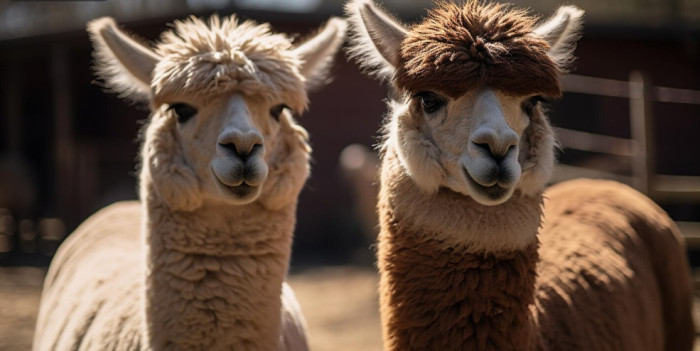
Llama ears are long and curve inward, often described as banana-shaped. Alpaca ears are shorter, straighter, and more pointed.
This is one of the fastest identification clues. It works even when fleece has been recently shorn.
Face and Head
Llamas have longer faces and larger heads. Alpacas have shorter muzzles, fuller fleece around the face, and a softer rounded appearance.
Fleece style can exaggerate the difference. A heavily fleeced alpaca looks much rounder than a freshly shorn one.
 magnific
That’s when she noticed the llama’s banana-shaped ears curving inward, even though the fleece had been recently shorn.
Fleece and Fiber
Alpacas were selected for dense, fine fiber. Their fleece generally contains fewer coarse guard hairs and is prized for softness.
Llamas often have a double coat with coarser guard hair over a softer undercoat, though fiber type varies by individual and breed. Some llamas produce very fine usable fiber.
Oregon State University Extension's llama and alpaca care guide notes that alpacas generally produce finer single-coat fiber, while llamas are better suited to packing because of their size.
Wool or Fiber?
People often say llama wool or alpaca wool. Fiber is the more accurate general term because camelid fleece differs structurally from sheep wool.
Both need regular shearing in climates where fleece will not shed naturally. Poorly managed fleece can lead to heat stress, matting, skin problems, and hidden weight loss.
 magnific
Next came the head comparison, because the llama’s longer face and bigger head looked nothing like the alpaca’s shorter, softer muzzle.
Behavior
Llamas and alpacas are social, alert, and communicate through posture, ear position, tail position, humming, alarm calls, and movement.
Llamas may appear more confident around people because many have been selected and trained for work. Alpacas often stay closer to the group and can be more cautious.
Individual handling matters. Pupperish's feature on friendly alpacas shows relaxed individuals, not a guarantee that every alpaca wants to be hugged.
If you are comparing sizes and categories, it helps to remember how a lamb is just a young sheep, not a separate animal, in Lamb vs Sheep vs Goat: What Is the Difference?.
Do Llamas and Alpacas Spit?
Both can spit. Spitting is usually directed at other camelids during feed disputes, breeding conflict, or social correction. A frightened, badly handled, or highly annoyed animal may spit at a person.
Llamas do not hold a monopoly on it. The viral stories about llamas spitting at people are memorable because the behavior is unpleasant, not because it is constant.
Respect space, avoid crowding feeders, and learn warning signs such as ears pinned back and a raised chin.
What Do They Eat?
Both are modified ruminants adapted to forage. They need grass or hay, clean water, species-appropriate minerals, and diets adjusted to body condition, age, reproduction, and climate.
Overfeeding grain can cause obesity and digestive problems. Pasture alone may not provide every required mineral.
Their soft padded feet can be gentler on ground than hooves, but overstocking will still damage pasture.
 magnific
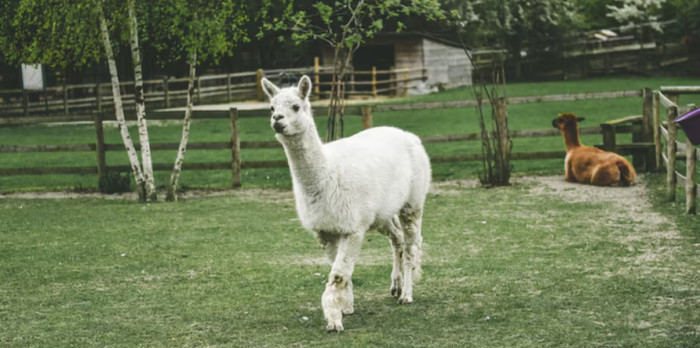
Then the whole “wool vs fiber” argument got real, especially when she saw how alpaca fleece tends to be denser and finer, while llamas can carry packing weight better.
Feet
Llamas and alpacas have two toes with toenails and padded soles rather than true hooves. Toenails need trimming when normal wear is insufficient.
The pads help on varied terrain but do not eliminate the need for dry footing and regular inspection.
Teeth
Both have lower incisors that meet an upper dental pad. Males may develop fighting teeth that require monitoring or trimming by a qualified professional.
Dental problems can cause weight loss that remains hidden under fleece.
Social Needs
Both species need camelid companions. A single llama placed with sheep may provide some guardian behavior, but it still lacks normal same-species interaction.
Alpacas should be kept in groups, not pairs chosen only for visual symmetry. The bond between a baby alpaca and its mother makes that social dependence obvious.
Guarding
Llamas are sometimes used to guard sheep, goats, or poultry from certain predators. Their size, alertness, and tendency to confront can be useful.
Not every llama is an effective guardian. Multiple llamas may bond with each other and ignore the flock. Large predator pressure also exceeds what a llama can handle safely.
Alpacas are generally less suitable as guardians because they are smaller and more flock-oriented.
 magnific
Finally, she watched their posture and ear position like it was a language, and the whole barnyard stopped feeling confusing.
Packing
Adult llamas can carry appropriately fitted packs after training and physical maturity. Load, terrain, distance, heat, body condition, and tack fit must be managed carefully.
Alpacas are not pack animals for human loads.
Can Llamas and Alpacas Live Together?
Yes, with enough space, compatible groups, appropriate feeding, and disease control. Size differences can create bullying or breeding risks.
They should not share equipment or pasture casually with new arrivals. Quarantine and veterinary planning matter because parasites and infectious disease can spread between camelids.
Which Is Better for a Small Farm?
Choose alpacas when fine fiber is the main goal and a group can be kept. Choose llamas when packing, guarding, larger fiber animals, or calmer human interaction is the goal.
Both require fencing, shelter, shearing, toenail care, parasite control, companions, and camelid-competent veterinary care.
Compare miniature farm animals, unique farm animals, farm animals list, and backyard farm animals before assuming camelids fit limited land.
A therapy llama program at an airport shows what trained llamas can do. That calm public behavior comes from selection and training, not species alone.
 magnific
The Fastest Way to Tell Them Apart
Look at the whole animal:
- Larger body, longer face, and banana-shaped ears: llama
- Smaller body, fuller face, and short pointed ears: alpaca
Then check the fleece and purpose. Llamas carry. Alpacas clothe.
Once she could tell them apart by size, ears, and fiber, the barn stopped being a guessing game.
Want another livestock face-off, see how sheep flock while goats browse and investigate in Sheep vs Goat: Key Differences in Appearance, Behavior, and Care.

Damjan