Scientists Revive Dire Wolves After 10,000 Years And Pay Tribute To Game Of Thrones
“You’re hearing the first howl of a dire wolf in over 10,000 years.”
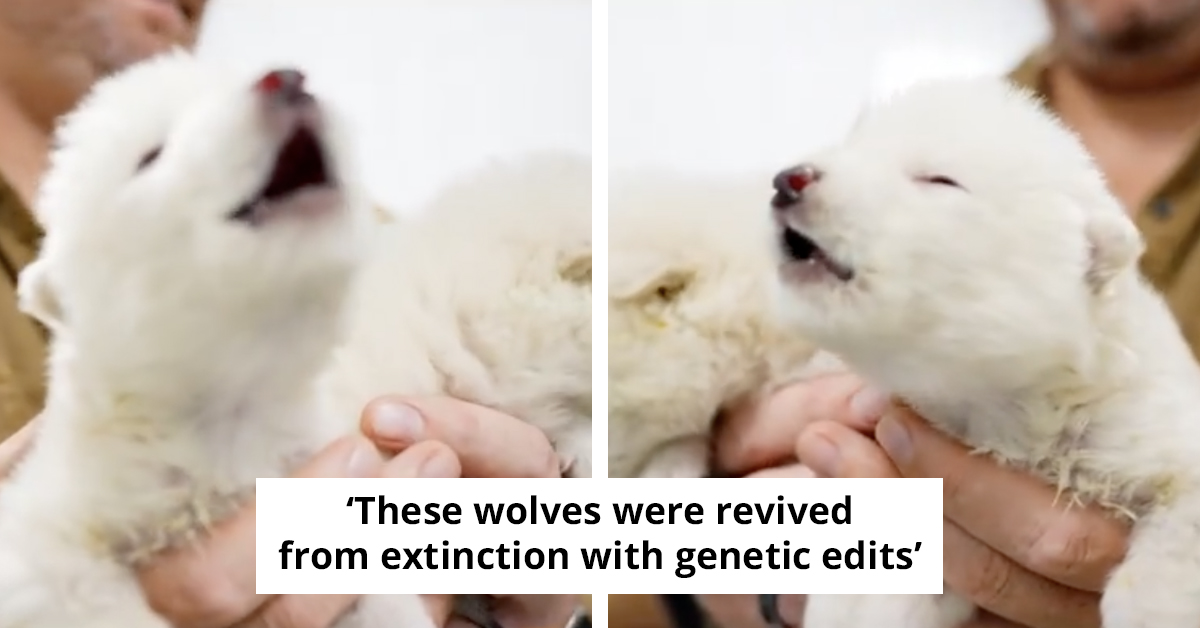
Dire wolves are back, and it’s not just a cosplay moment for Game of Thrones fans. Colossal Biosciences says it has revived them after roughly 10,000 years, turning ancient DNA into living pups carried by surrogate dogs.
Here’s the wild part, and why it’s complicated: the team didn’t have a perfect dire wolf blueprint. They reconstructed a complete genome from fossils, then edited a grey wolf’s DNA in 20 spots across 14 genes to coax dire wolf traits like coat texture, size, and muscle structure. The result looks close, but it’s not a flawless genetic clone, and the ecological stakes are huge.
Now the big question is what happens when “Winter is coming” becomes real biology.
Meet Romulus and Remus, the world’s first de-extinct animals.
Before anyone can celebrate, the embryos have to survive the genetic edits, the surrogate dogs have to carry the pregnancies, and the pups have to actually make it to birth.</p>
Colossal Biosciences explained that the process relied on “genetic edits derived from a complete dire wolf genome, meticulously reconstructed by Colossal from ancient DNA found in fossils dating back 11,500 to 72,000 years.”
To establish viable cell lines, scientists used the grey wolf as a donor species, as it is considered the dire wolf’s closest living relative. By editing the grey wolf’s DNA in 20 locations across 14 specific genes, researchers were able to introduce key physical traits associated with dire wolves. These genetic changes influenced characteristics such as coat color and texture, overall body size, and muscle structure.
The resulting embryos were implanted into surrogate dogs, which carried the pregnancies to term and gave birth to the pups.
Although the newborns resemble dire wolves both in appearance and behavior, researchers acknowledge that they are not perfect genetic replicas. Due to gaps in the ancient DNA and unknown variables, scientists cannot yet determine exactly how many genetic differences defined the dire wolf as a distinct species from its relatives.’
“By achieving this, we continue to push forward our broader mission—accepting humanity’s duty to restore Earth to a healthier state.”
That’s where the ethics section starts biting, because even a near-dire wolf could compete for habitat or bring diseases into ecosystems that are already balanced.</p>
Ethics of De-Extinction
He emphasizes that reviving extinct species may lead to unforeseen ecological consequences that could disrupt existing ecosystems.
Wolpe argues that while the technology is fascinating, it poses risks, including habitat competition and the potential spread of diseases.
This is similar to experts celebrating critically endangered red wolf pups, the biggest thriving group in the wild.
Then the genetic engineering angle kicks in, focusing on how those specific edits might help living animals adapt, not just how they look on day one.</p>
The Genetic Engineering Perspective
His work focuses on understanding how genetic modifications could help in adapting living organisms to changing environments.
He stresses the importance of public dialogue on these advancements to create informed policy that balances innovation with ecological responsibility.
And the dire wolf revival sets off the bigger debate the article teases, since the family of edited genes is only as complete as the ancient DNA they could reconstruct.</p>
The revival of the dire wolf, as announced by Colossal Biosciences, prompts a critical examination of the ethical and ecological implications surrounding de-extinction efforts. While the excitement of resurrecting a species long thought lost is palpable, it is essential to reflect on the potential consequences for current ecosystems and the delicate balance they maintain. The push for technological innovation must not overshadow the responsibility that comes with such power.
Furthermore, the focus on resurrecting the dire wolf raises an important dialogue about the necessity of prioritizing the preservation of existing endangered species. As we navigate these uncharted waters, it is crucial to engage in public discourse that fosters informed policymaking. This approach will help ensure that scientific advancements enhance biodiversity rather than disrupt ecological integrity, paving the way for a more balanced coexistence with nature.
The dire wolves may be born, but the real test is whether Earth is ready for them.
After dire wolves, see how the Mexican wolf clawed its way back from extinction.