12 Black and White Animals With Nature’s Boldest Contrast
From pandas and orcas to lemurs and lizards, these black and white animals show how useful high-contrast patterns can be.
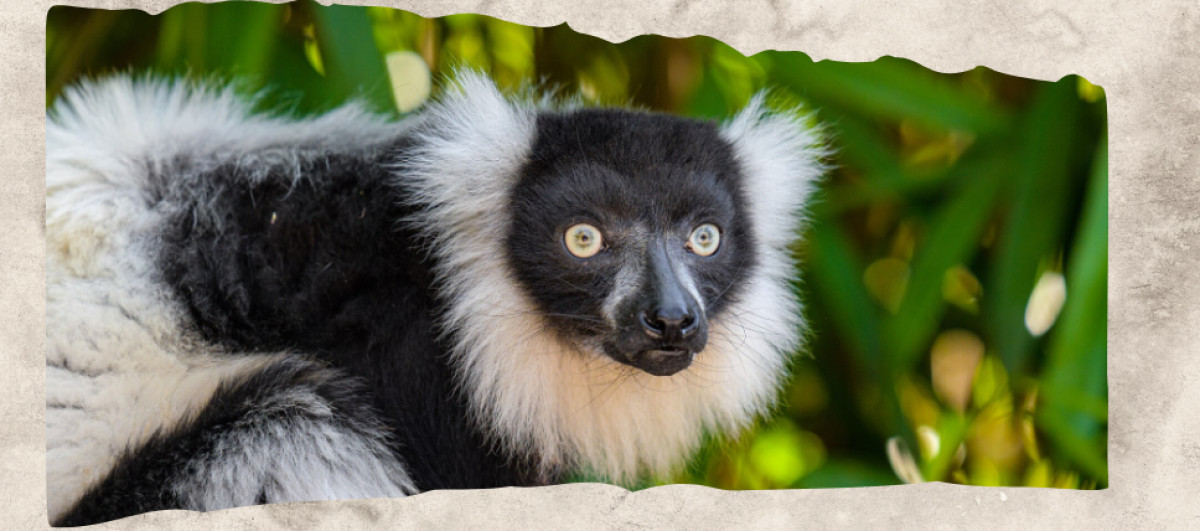
Black-and-white animals look like they were drawn with a highlighter, but there is a reason nature keeps doing this dramatic color split. Sometimes it is about survival, breaking up a body shape so predators have a harder time spotting the outline. Other times it is about recognition, so the right animal knows it is looking at the right species.
And here is where it gets tricky: the same pattern can do multiple jobs at once. A giant panda’s dark eye patches and limbs can look “costumed” up close, but out in the distance repeated shapes can scramble the silhouette. An orca’s bold blocks of black and white can be easier to track in still images, yet they can shift as the animal swims and turns. Even the Malayan tapir’s pale saddle can throw off visibility in dim forest light, especially when the animal is active at night.
So when you see these contrasts, you are not just looking at a cool look, you are catching a whole strategy in motion.
Why do so many animals use black and white?
Black and white can work as camouflage even when the pattern looks obvious to us. High-contrast markings may break up the body outline, match alternating light and shadow, or create countershading. The Smithsonian has long documented adaptive animal coloration as a survival feature rather than a decorative accident.
Sometimes the explanation is more social. A face pattern can help members of the same species recognize one another. In other cases, the pattern may warn predators or make an animal look larger, stranger, or harder to track.
1. Giant panda
Giant pandas are the obvious celebrities of black-and-white wildlife. The dark ears, eye patches, shoulders, and legs sit against a pale body in a pattern that no other bear shares. Pupperish has even covered the surreal sight of pandas at a tea-party picnic, where the natural markings make them look almost costumed already.
At close range the markings are obvious, yet from farther away repeated shapes can break the body into smaller visual pieces and make the outline harder to read.
 commons.wikimedia.org
2. Orca
Orcas use sharp blocks of black and white rather than stripes or spots. A white eye patch and pale underside interrupt the large black body, while a gray saddle patch sits behind the dorsal fin. Their coloration is so distinctive that individual animals can often be recognized from natural markings and fin shape.
The pattern is more useful to think about in motion, because lines and patches shift against the background as the animal walks, swims, or turns.
Pupperish has followed orcas in a far less cute context too, including killer whales hunting great white sharks.
 commons.wikimedia.org
3. Malayan tapir
The Malayan tapir looks as if someone wrapped a white blanket around the middle of a black animal. The abrupt pale saddle can disrupt the outline of the body in dim forest light, especially at night when the animal is active.
Its markings also show that pattern and color are separate questions: the same layout can work with very different shades and in very different habitats.
 commons.wikimedia.org
4. Striped skunk
A striped skunk combines black fur with long white bands that can run from the head toward the tail. The pattern is not subtle, and that is part of the point. Skunks have powerful chemical defenses, so being recognizable can prevent a predator from making the same mistake twice.
Individual variation can matter too, with spacing, width, or shape changing slightly while the overall pattern remains recognizably typical for the species.
 commons.wikimedia.org
5. Black-and-white ruffed lemur
This lemur wears irregular black and white patches across a thick coat. The pattern varies among individuals and populations, but the contrast remains strong. The bright pale ruff around the face makes the animal look larger and fluffier than its narrow muzzle suggests.
The visual effect depends heavily on scale. What looks like a bold design in a photograph can become surprisingly subtle when the animal is partly hidden by vegetation or shadow.
 commons.wikimedia.org
6. African penguin
African penguins wear the classic dark-back, pale-front arrangement associated with many seabirds. A black chest band and facial markings add extra contrast. On land they look formal. In water the same pattern can help reduce visibility.
That makes the pattern more than decoration. It changes how quickly another animal can detect, identify, or judge the body in front of it.
 commons.wikimedia.org
And for a totally different look, these pink animals include flamingos and more.
7. Black-and-white colobus
Black-and-white colobus monkeys combine a dark body with long pale fringes and a white tail tip. The fur can look almost cape-like when the animal leaps through the canopy. Their pattern is far from a neat geometric design. It is unmistakable anyway.
Compared with a solid coat, repeated markings add visual noise, which can be especially effective in habitats already full of broken light and overlapping shapes.
 commons.wikimedia.org
8. Pied tamarin
Pied tamarins have a dark lower body and a largely white upper body with a bare dark face. The split is so clean that they almost look like two different animals joined together. Their appearance is a good example of how “black and white” can mean large color blocks rather than repeated markings.
The same general pattern can serve different roles in different species, so it is safer to read the markings in context rather than assign one explanation to every animal here.
 commons.wikimedia.org
9. Black-and-white tegu
Argentine black-and-white tegus carry a dense pattern of pale bands and spots over a dark body. Juveniles can show greener tones, but adults develop the high-contrast look that gives the species its common name.
What stands out to us may function very differently to another animal with different vision, viewing distance, and attention to movement.
 commons.wikimedia.org
10. Zebra swallowtail butterfly
The zebra swallowtail takes the color scheme into the insect world. Its pale wings are crossed by dark stripes, while long tails extend from the hindwings. It is technically both a black-and-white animal and a striped one, which shows how appearance categories naturally overlap.
The pattern also creates a useful identification clue, particularly when closely related species differ in the number, width, or placement of their markings.
 commons.wikimedia.org
11. Dall’s porpoise
Dall’s porpoises have glossy dark bodies broken by large white patches along the flanks and belly. The pattern is sharp enough to look almost painted on, especially when the animal surfaces at speed. Their compact shape and high-contrast markings can make them easy to distinguish from more uniformly gray porpoises.
Even a simple-looking pattern becomes more complex once body shape is considered, because stripes or spots wrap around curves and change with posture.
 commons.wikimedia.org
12. Tuxedo cat
Domestic tuxedo cats are not one species or breed. The name describes a black-and-white coat pattern, often with a dark back and head plus a white chest, belly, paws, or face. Pupperish has covered both tuxedo cat facts and a study discussing black-and-white cat behavior.
Across the list, the recurring theme is not one purpose but one visual solution that has appeared repeatedly in unrelated groups.
Tuxedo cats also show why coat pattern is not the same as species identity. The same cat can belong on a visual list of black animals or white-marked pets depending on how the coat is distributed.
 commons.wikimedia.org
That is why the giant panda’s “tea-party picnic” vibe is actually more than cute, the pattern can still confuse an eye in the wild.
Next comes the orca, where those big black-and-white patches are basically a moving break-apart effect as the whale swims and turns.
And if you think the contrast is only for show, the Malayan tapir proves it by using that bright saddle to disrupt the outline in low, nighttime forest conditions.
Contrast can be more useful than color
Bright color attracts attention, but black and white can be just as visually powerful. Sometimes the pattern hides an animal. Sometimes it advertises a defense. Sometimes it helps break up a body shape that would otherwise be easy to follow.
The strongest examples also show why simple color labels are only the starting point. A panda’s patches, an orca’s countershading, and a skunk’s warning pattern may use the same two colors, but they are doing very different jobs. That makes them a useful contrast with white animals, where pale color often works without a strong dark pattern beside it.
Across the examples, the most interesting pattern is the variety behind a shared appearance. Similar-looking features can come from different anatomy, environments, and evolutionary pressures, which is why comparing species side by side reveals more than the visual trait alone.
The next time you spot black-and-white, you will wonder who it is confusing, and who it is trying to be recognized by.
Want more contrast tricks, check out these white animals that stand out in nature.

Damjan