12 Animals With Big Noses and What Those Strange Snouts Actually Do
A giant nose can amplify a call, filter dust, detect prey, or work like a tiny hand. These animals have some of nature’s strangest faces.
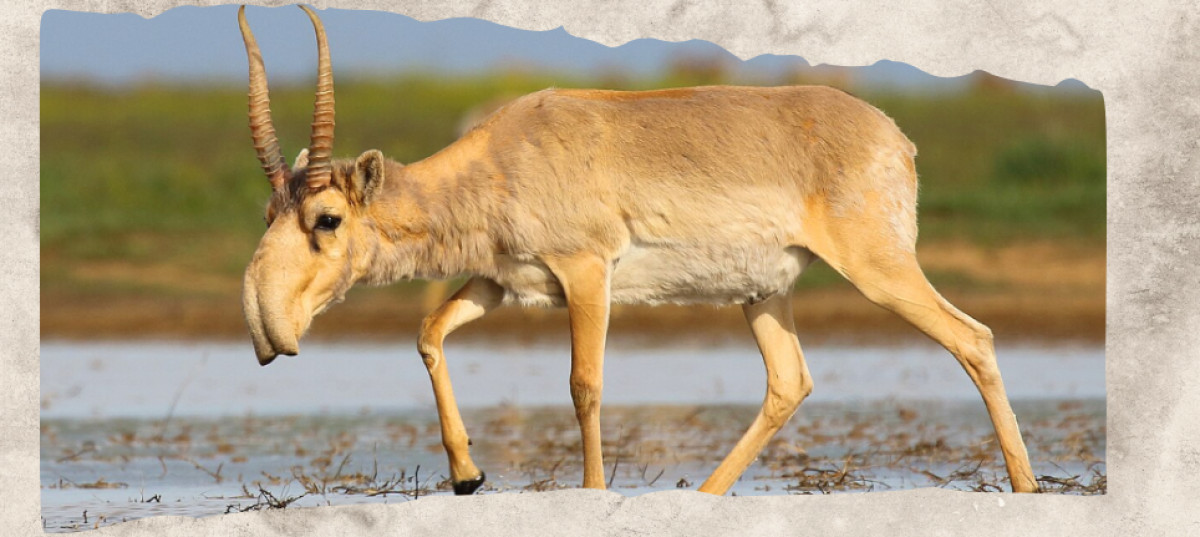
There’s a reason animals show up wearing their weirdest faces, and it’s not just for shock value. From a proboscis monkey’s droopy, show-off snout to the saiga antelope’s dust-filtering nose, these “big nose” looks are doing real work.
And here’s where it gets messy, because one feature can handle multiple jobs at the same time. The same snout that helps with smell can also change breathing and call resonance, or even act like a flexible hand for grabbing food. Meanwhile, the southern elephant seal turns its inflatable nose into a loud, competitive signal during breeding season.
So when you see that oversized snout, you’re not looking at one trick, you’re looking at an entire system in disguise.
Why do animals evolve long or oversized noses?
Smell is part of the answer, especially for mammals that search for food by scent. But noses and snouts can also become tools. Tapirs use a flexible mini-trunk to grasp vegetation. Star-nosed moles turn the end of the face into an extraordinary touch organ. Elephant seals use an enlarged nose in social and acoustic display.
That makes this group more functionally diverse than it first appears. The same is true of animals with big ears, where one conspicuous feature can handle hearing, cooling, and communication at the same time.
1. Proboscis monkey
Adult male proboscis monkeys have long fleshy noses that hang over the mouth. The structure becomes larger with age and is linked to social signaling, while the nasal cavity also affects the resonance of calls.
The shape becomes easier to understand once the nose is viewed as part of a larger system involving breathing, smell, feeding, sound, and facial movement.
It is hard to imagine the species without it.
Females and younger males have smaller noses, so the extreme form is most obvious on mature males.
 commons.wikimedia.org
2. Saiga antelope
The saiga’s enlarged, downward-pointing nose gives it one of the strangest profiles among hoofed mammals. The flexible nasal structure helps condition incoming air, including filtering dust during dry conditions and warming very cold air in winter.
An enlarged snout does not automatically mean a stronger sense of smell, because the visible outside shape and the internal sensory anatomy are not the same thing.
Male saiga also carry horns, which makes the species a natural bridge to animals with horns. Two exaggerated features. One very unusual head.
 commons.wikimedia.org
3. Southern elephant seal
Adult male southern elephant seals develop a large inflatable proboscis that hangs over the mouth. During breeding competition, the nose contributes to the resonant calls males use around rivals and groups of females.
In some species the structure is flexible enough to interact directly with the environment, turning part of the face into a tool as well as a sensory organ.
On a full-grown bull, the scale of the animal makes the nose look even more extreme.
 commons.wikimedia.org
4. Baird’s tapir
Tapirs have short, flexible proboscises formed from the nose and upper lip. They can move them to grasp leaves, investigate objects, and manipulate food.
Others use the nose indirectly, changing airflow, resonance, or the way calls are produced rather than simply detecting odors.
It is basically a compact trunk.
Unlike the proboscis monkey’s hanging nose, the tapir’s snout is active and dexterous, making it useful throughout the day.
 commons.wikimedia.org
5. Aardvark
An aardvark has a long tubular snout paired with powerful digging claws and large ears. It uses smell to locate ants and termites, then digs into nests and feeds with a long tongue.
The unusual proportions can also matter socially, especially when adults differ strongly by sex or when the feature becomes more pronounced with age.
The nose, ears, and claws all point toward the same lifestyle. Nothing about the face is accidental.
 commons.wikimedia.org
6. Giant anteater
A giant anteater’s head narrows into an extremely long snout with a small mouth opening at the end. It does not have teeth. Instead, the animal uses a long sticky tongue to collect ants and termites after opening a nest with its claws.
This is why the word 'nose' covers such different adaptations here: the same area of the face has been modified for very different tasks.
The visual effect is dramatic because the skull and muzzle form one continuous taper.
 commons.wikimedia.org
This is similar to the markhor’s spiraled horns and the African buffalo’s heavy boss.
7. Star-nosed mole
The star-nosed mole has the strangest “nose” on this list: 22 fleshy rays arranged around the nostrils. Those appendages are packed with sensory receptors and help the mole identify food with extraordinary speed while moving through dark tunnels and wet habitats.
Habitat matters too. Dust, water, soil, vegetation, and temperature can all place different demands on the front of an animal's respiratory system.
It looks decorative. It is anything but.
 commons.wikimedia.org
8. Elephant shrew
Elephant shrews, also called sengis, have slender mobile noses that extend well beyond the mouth. They use the flexible snout while searching through leaf litter for small invertebrates.
A long or broad snout may look awkward in a still image but make perfect sense once the animal is feeding, digging, calling, or searching for prey.
One tiny species made headlines after being rediscovered decades after its last scientific record, and Pupperish covered the return of that elephant-nosed sengi. Its nose is small in absolute terms but enormous relative to its face.
 commons.wikimedia.org
9. Coati
Coatis have long flexible snouts used constantly while foraging. They poke through soil, leaves, logs, and crevices, relying heavily on smell to locate fruit, insects, eggs, and other food.
The visible structure is only the part we notice first; muscles, cartilage, bone, air passages, and sensory tissue determine what it can actually do.
The long nose gives them a permanently curious expression, which happens to match the way they use it.
10. Long-nosed bandicoot
Long-nosed bandicoots have tapered muzzles and a strong sense of smell suited to finding food in soil and leaf litter. They dig small conical holes while searching for invertebrates, fungi, and plant material.
Long snouts also appear in domestic animals through selective breeding. A Borzoi named Eris became known for an exceptionally long snout, though the evolutionary and breeding histories are obviously very different.
 commons.wikimedia.org
10. Sword-nosed bat
The sword-nosed bat has an elongated nose structure that contributes to a face already full of specialized shapes used in echolocation and sensory processing. Bats show just how far mammalian noses can diverge from the familiar dog-or-cat template.
In evolutionary terms, the front of the face is highly adaptable, and small changes in length or flexibility can open up new ways to feed or sense the environment.
Big facial structures also tend to make animals with big eyes look even more exaggerated because proportions shift across the whole head.
 commons.wikimedia.org
11. Hooded seal
Adult male hooded seals can inflate a nasal sac into a dark balloon-like hood over the top of the head. They can also produce a red membrane from one nostril during displays, creating one of the strangest faces seen among marine mammals.
Taken together, these animals show how far a basic mammalian or vertebrate snout can be reshaped without losing its core role in breathing and sensing.
Noses can be visually memorable even when they are not long. Domestic animals offer smaller examples of how much information sits on that part of the face: individual dog nose prints have distinct patterns, while research into the cat’s nasal airway shows how complex smelling can be behind a seemingly ordinary nose.
 commons.wikimedia.org
12. Long-nosed bandicoot
Long-nosed bandicoots have tapered muzzles and a strong sense of smell suited to finding food in soil and leaf litter. They dig small conical holes while searching for invertebrates, fungi, and plant material.
Long snouts also appear in domestic animals through selective breeding. A Borzoi named Eris became known for an exceptionally long snout, though the evolutionary and breeding histories are obviously very different.
 commons.wikimedia.org
That’s why the proboscis monkey’s nose is basically a whole facial control panel, not just a bouncy accessory on mature males.
Then the saiga antelope steps in, turning its downward-pointing nose into a winter heater and a dusty air filter, all while the males are already busy with their horns.
Next comes the southern elephant seal, where that inflatable proboscis is all about breeding rivals and the resonant calls that roll through the group.
By the time you connect these to the star-nosed mole’s touch-heavy snout style, the “big nose” theme feels less like a coincidence and more like a strategy.
A big nose can be a tool, filter, signal, or sensor
The proboscis monkey and star-nosed mole barely seem to belong in the same category, yet both show how evolution can reshape the front of the face around a particular need. Add a tapir’s gripping snout, a saiga’s air-conditioning nose, and an elephant seal’s display structure, and the variety gets even wider.
That is the useful part of grouping them by appearance. The shared shape gets your attention first. The function explains why it stayed. The same logic applies to spiky animals, where similar-looking defenses can be built from completely different anatomical structures.
Next time you spot a long snout, don’t just stare, it’s probably running the whole operation.
Want more face-powered features? See animals with oversized ears that use every extra inch.

Damjan