
12 Animals With Big Ears That Put Every Extra Inch to Work
Oversized ears can pick up faint sounds, release heat, and transform a face. These big-eared animals use them in very different ways.
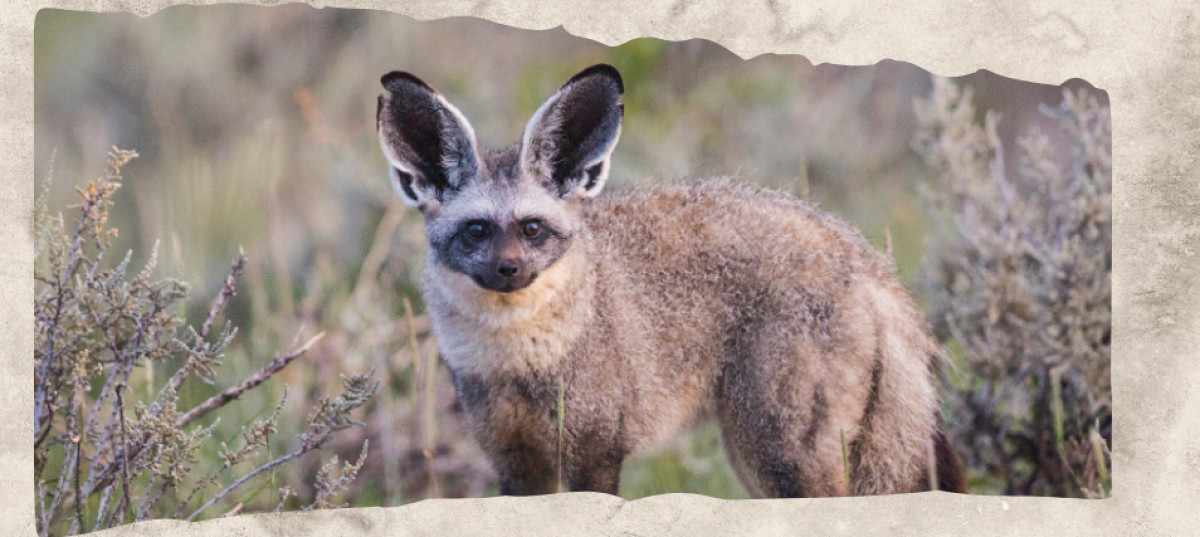
Animals with big ears often look as if somebody scaled up one feature and forgot to stop. In reality, those oversized ears can be highly practical, helping an animal detect prey, locate danger, communicate, or dump excess body heat.
The same shape can solve several problems at once. San Diego Zoo Wildlife Alliance notes that large ears can support both hearing and temperature regulation, especially in animals from warm environments. Desert foxes and elephants may look nothing alike, yet both benefit from having a lot of ear surface area.
Then there are specialists. The Smithsonian’s National Zoo describes the fennec fox as a desert canid whose large ears help release heat and detect prey moving under sand.
That is a lot of work for two ears. Large ears also illustrate how one body part can serve more than one purpose at the same time. The outer ear can collect sound, but it is also living tissue with blood vessels, muscle, and a large exposed surface.
In a hot climate that surface may help release heat, while in a small predator it can improve the ability to locate faint movement. The balance differs by species, which is why similarly oversized ears appear on animals as unrelated as elephants, foxes, bats, rabbits, and marsupials.
Why do some animals have enormous ears?
Hearing is the obvious answer, but not the only one. Large ears can collect sound efficiently, which helps nocturnal hunters and prey animals detect movement before they can see it. Thin, well-supplied ear tissue can also radiate body heat.
This is why large ears turn up repeatedly in hot deserts and among animals active at night. They are visual extremes with a practical payoff, much like the oversized sensory equipment of animals with big eyes.
1. African elephant
African elephants have the largest ears of any living land animal. The broad surfaces are full of blood vessels, and flapping them can help move air across the skin as blood circulates through the tissue.
A larger outer ear can intercept more sound, but the animal still depends on ear shape, mobility, and the inner auditory system to locate where that sound came from.
Their ears also help identify the species: African elephants generally have much larger ears than Asian elephants. From a distance, the outline alone can be a clue.
 commons.wikimedia.org
2. Fennec fox
A fennec fox’s ears can look enormous on its tiny head. They are useful in the Sahara and other North African deserts, where hearing faint movement can help the fox find small prey and large ear surfaces can aid heat loss.
When heat control is involved, the benefit comes from exposed surface area and blood flow rather than from the ear acting like a simple fan.
The result is one of the clearest examples of form meeting environment.
 commons.wikimedia.org
3. Long-eared jerboa
The long-eared jerboa takes the idea even further. Its ears are exceptionally large relative to its body, rising above a tiny rodent with long hind legs and an elongated tail.
Many big-eared animals can rotate or reposition the ears, which helps them sample different directions without moving the entire head.
Pupperish has looked at how the long-eared jerboa uses those huge ears during life in the Gobi region. On such a small animal, there is no way to miss them.
 commons.wikimedia.org
4. Bat-eared fox
Bat-eared foxes have broad, upright ears that help them locate insects and other small prey. They feed heavily on termites in parts of their range, so acute hearing is useful when dinner is tiny and often hidden.
The feature is particularly useful in open or dry habitats where faint sounds may travel farther and shade is limited.
Their face is dominated by the ears in much the same way that animals with big noses can be defined by one exaggerated feature.
 commons.wikimedia.org
5. Serval
Servals are long-legged African cats with large rounded ears set high on the skull. The ears are not just visually impressive. Servals use sensitive hearing to detect small animals in tall grass, then launch high pounces to capture prey.
Large ears can also become part of body language, changing position during alertness, aggression, relaxation, or social interaction.
Large ears on a cat can look almost decorative until you watch what the animal is listening for.
 commons.wikimedia.org
6. Caracal
Caracals are famous for black ear tufts, but the ears beneath those tufts are substantial too. The combination gives the cat a sharply recognizable profile.
This is a good example of one structure carrying several jobs at once, with hearing and temperature control sometimes overlapping in the same animal.
Pupperish has covered the caracal’s striking ears, including the origin of its name, which is linked to the idea of a “black ear.” It is one of those animals where color and ear shape reinforce each other.
 commons.wikimedia.org
7. Greater bilby
The greater bilby is an Australian marsupial with long ears, a pointed muzzle, and strong digging limbs. Its ears can swivel toward sounds, helping a nocturnal animal stay aware while foraging after dark.
The cost is that a large exposed ear can be vulnerable to injury or cold, so the shape only works when the benefits outweigh those trade-offs.
Big ears are especially common among small nocturnal mammals because every early warning matters.
 commons.wikimedia.org
8. Black-tailed jackrabbit
Black-tailed jackrabbits carry long ears that can help with both sound detection and heat exchange in dry, open country. The ears may stand high above vegetation while the rest of the animal stays low.
On small animals the ears can look disproportionately huge, yet that ratio can be exactly what allows them to detect prey or danger before it is visible.
They are hares rather than rabbits, built for speed and exposed terrain.
 commons.wikimedia.org
9. Brown long-eared bat
The name says it all. Brown long-eared bats have ears that can approach the length of the body and become especially conspicuous when the animal is at rest.
Not every species uses its ears in the same way, which is why size alone should not be treated as proof of one specific adaptation.
Those ears help with very quiet echolocation and listening for prey-generated sounds. Huge does not mean clumsy. Here, it means sensitive.
 commons.wikimedia.org
10. African wild dog
African wild dogs have large rounded ears that give the face a distinctive silhouette. The ears support acute hearing and may also help with heat loss during an active life in warm environments.
The surrounding skull and muscles matter too, because directing the ear toward a sound source can improve the information reaching the brain.
Dogs can show the same trait in exaggerated domestic form. A gallery of big-eared dogs makes that variation obvious, from upright bat-like ears to long floppy ones.
 commons.wikimedia.org
11. Springhare
Springhares combine rabbit-like ears with powerful hind legs and a long tail, even though they are rodents. They are nocturnal and emerge after dark to feed, making good hearing valuable when predators may be difficult to see.
In photographs the ears dominate the face; in the wild, their real value often appears when the animal is listening, cooling, or communicating.
The mix is unusual: giant ears up front, kangaroo-like movement behind.
 commons.wikimedia.org
12. Sand cat
Sand cats are small desert felines with low-set, wide ears that can look especially broad because of the flat head shape. Their hearing helps them detect prey around and beneath the sand, where vision alone would not be enough.
Across unrelated mammals, oversized ears have evolved repeatedly because sound and heat are problems that many species need to solve.
An oversized feature can make even familiar animal groups look strange. Some shelter and pet dogs win people over with the same effect, including one large-eared rescue dog whose ears became part of his instantly recognizable face.
The pattern also connects visually with animals with horns and spiky animals: very different structures, all capable of changing the entire outline of a head.
 commons.wikimedia.org
Big ears are built for more than hearing
The fennec fox, elephant, serval, and long-eared bat do not use their ears in exactly the same way. Some need cooling. Some need precise sound localization. Many benefit from both.
That is why oversized ears keep evolving in unrelated groups. They look dramatic to us, but for the animal carrying them, extra surface area can be useful every single day.

Damjan