
Mesopotamian Gods: The Oldest Pantheon on Record
The flood, the ark, the garden. The oldest gods humans ever wrote down were telling these stories a thousand years before the Bible did.
A city doesn’t just pick a god, it builds its whole identity around them, and in Mesopotamia that choice could get flipped like a switch when a new dynasty took over. One day your sky ruler is An, the next it’s Anu, and nobody acts like it’s strange. The same gods are still there, it’s the lineup that keeps getting shuffled.
That’s the complicated part: this isn’t one frozen religion, it’s a long power struggle across Sumerians, Akkadians, Babylonians, and Assyrians. When a city rises, its patron god climbs the ladder, so the “important” deity depends on who’s winning. Meanwhile, the core cast stays dramatic, An sits remote like a chairman, Enlil runs the show with the Tablets of Destiny, and Enki keeps saving the humans when Enlil decides they’re too loud.
So if you think the Mesopotamian pantheon was stable, the flood story is about to ruin that assumption.
A Pantheon That Kept Changing Hands
One thing to understand first: there was never a single fixed Mesopotamian religion. The region was ruled in turn by Sumerians, Akkadians, Babylonians, and Assyrians across three thousand years, and each conquering culture inherited the gods and renamed or reranked them.
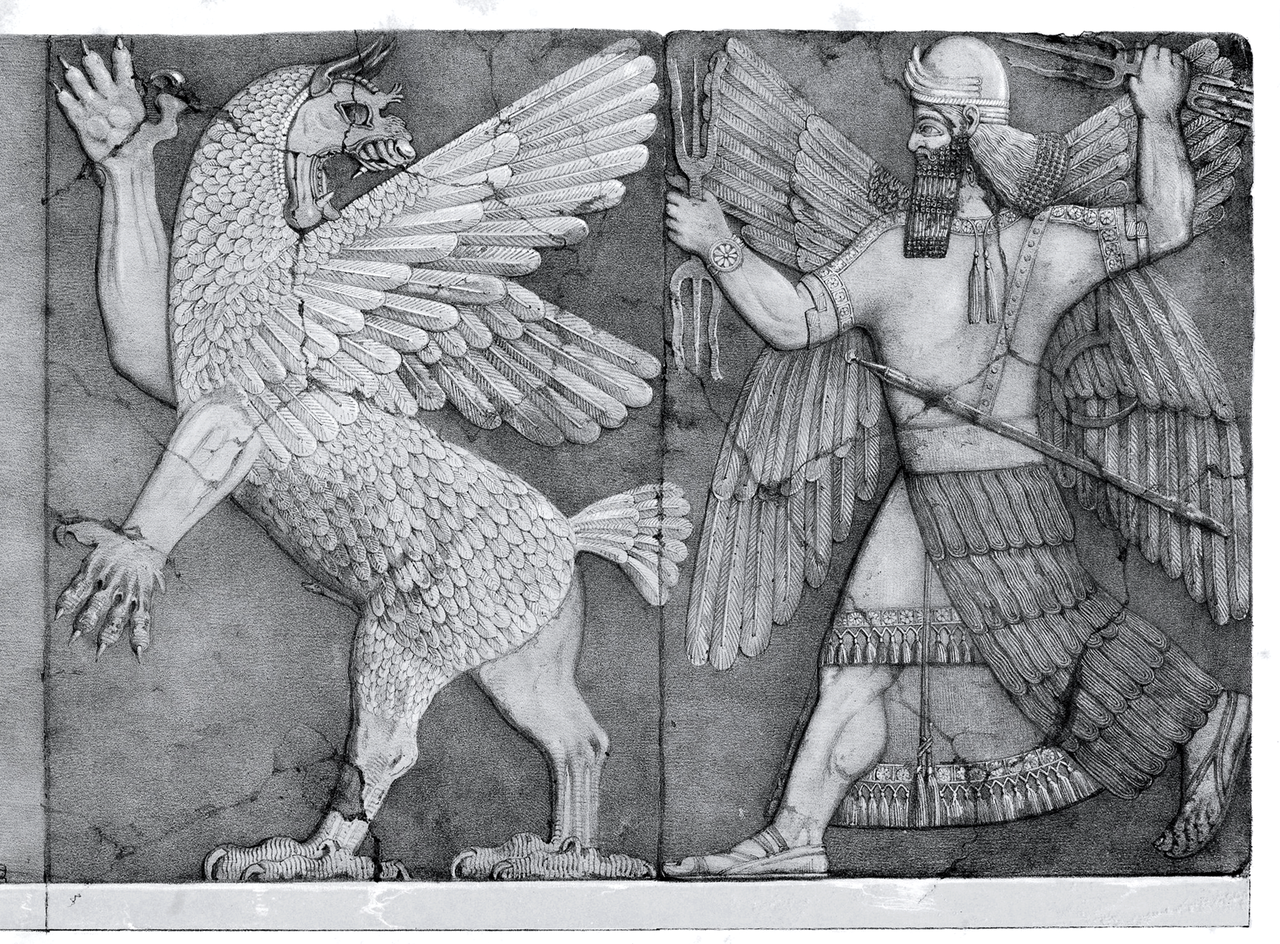
The Sumerian sky god An became the Akkadian Anu. Enki became Ea. Inanna became Ishtar. The gods stayed; the labels and the pecking order shifted with whoever held power. The Metropolitan Museum notes the political logic plainly: a city's strength was measured by how high its patron god ranked, so when a city rose, its god was promoted, sometimes to the very top.
 commons.wikimedia.org
When Anu stays distant as the “source of authority,” it makes the whole system feel less like worship and more like political branding for whoever’s in charge.
The Great Gods
At the center sat a handful of major deities the Sumerians sometimes called the seven who decree fate.
An (Anu)
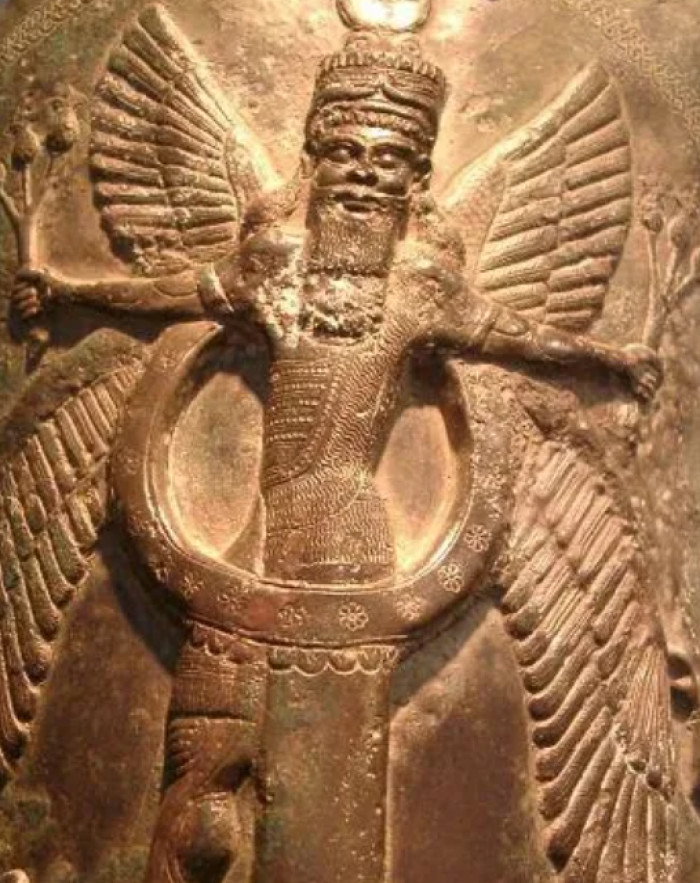
An (Anu) is the sky, the king of the gods, and the ancestor of most of them. He is the source of all legitimate authority, divine and royal, and confers kingship on gods and men alike. But he is strangely passive, rarely worshipped directly and rarely acting in myths. He is the chairman of the board, remote and above it all, while others run things.
 commons.wikimedia.org
Enlil
Enlil is the one who actually runs things. God of wind and storm, keeper of the Tablets of Destiny that hold the fates of gods and humanity, Enlil wielded the real executive power. His word could not be questioned, and it was Enlil, annoyed that humans had grown too numerous and too loud to let him sleep, who sent the great flood to wipe them out.
 commons.wikimedia.org
Enki (Ea)
Enki (Ea) is the one who saved them. God of fresh water, wisdom, magic, and creation, Enki is the clever, humanity-favoring counterweight to Enlil's severity. He devised the plan to make humans from clay so they could do the gods' labor, and when Enlil sent the flood, Enki warned a mortal to build a great boat and preserve life.
If that plot sounds familiar, it should.
 commons.wikimedia.org
Then Enlil steps in, storms and all, and you realize why a city’s power could literally change the god everyone swears by.
For how later Christian writers shaped belief, see the two Icelandic books that describe Norse gods.
Enki’s clay-creation plan and his warning to build a boat show how the same pantheon can hold two opposite vibes, punishment and rescue, depending on the moment.
The rest of the core pantheon:
- Inanna (Ishtar), goddess of love, sex, and war, the most vivid personality of them all, whose descent into the underworld is one of the oldest recorded myths
- Ninhursag, the mother goddess of the earth and fertility, who helped create humankind
- Nanna (Sin), the moon god, father of the sun
- Utu (Shamash), the sun god and divine judge, who saw everything and enforced justice
- Marduk, patron of Babylon, who rose from a minor deity to king of the gods as Babylon itself rose to power
And once Inanna, love and war in one package, gets folded into the new rankings like a celebrity getting promoted, you see how fast the pecking order could shift with conquest.
The Flood That Came First
The single most striking thing about Mesopotamian religion is how many of its stories reappear, centuries later, in the Bible. The flood is the clearest case. In the Epic of Gilgamesh and the older Atrahasis, the gods resolve to destroy humanity with a deluge, one god warns a chosen man to build a vessel, the man loads it with his family and animals, the waters come, the boat lands on a mountain, and the survivor releases birds to find dry land before offering a sacrifice.
This was written down more than a thousand years before the Book of Genesis. The parallels are close enough that scholars have argued about the connection since the tablets were first translated in the 1870s, a discovery that stunned Victorian readers.
Other echoes run through the same literature. Humans shaped from clay. A lost paradise. A serpent that cheats a hero out of a plant of eternal life in Gilgamesh, the oldest epic ever written. These are not proof of borrowing in every case, but they show that the deep questions later religions asked, why we die, why we suffer, how the world began, were first framed by the world's oldest civilizations in the language of these gods.
Why the Oldest Gods Were Forgotten
Mesopotamian religion did something no living religion did: it ended, completely, and stayed ended. The last cuneiform texts date to around the 1st century CE, and after that the names went silent for nearly two thousand years. Enlil, once king of the gods, was forgotten so thoroughly that his name meant nothing to anyone until archaeologists dug the tablets out of the sand.
That silence is why these gods feel obscure while Zeus and Thor feel familiar. The Greek and Norse gods were preserved by cultures that survived and kept retelling them, part of the long chain of myths every culture reshapes. Their own homeland is now among the oldest countries in the world. The Mesopotamian gods had no such inheritors. Their civilization collapsed, their language died, and their stories waited underground.
When they finally surfaced, they turned out to be the source. The oldest gods humans ever wrote down, older than the Norse or Greek pantheons, had been quietly underneath the more famous ones the whole time.
Read next in this series:
- Roman Gods and Their Greek Counterparts
- Famous Myths From Around the World That People Still Get Wrong
The Mesopotamian gods weren’t just worshipped, they were promoted, demoted, and weaponized by whoever held the throne.
Mesopotamia’s gods kept getting renamed, now see how Shinto’s 8 million kami work.