
Elon Musk Just Funded An AI Project That Might Rewrite The Story Of Ancient Rome
A million-dollar donation from Musk is fueling an AI-powered dive into the ruins of Rome — and experts say it could change what we think we know about history i
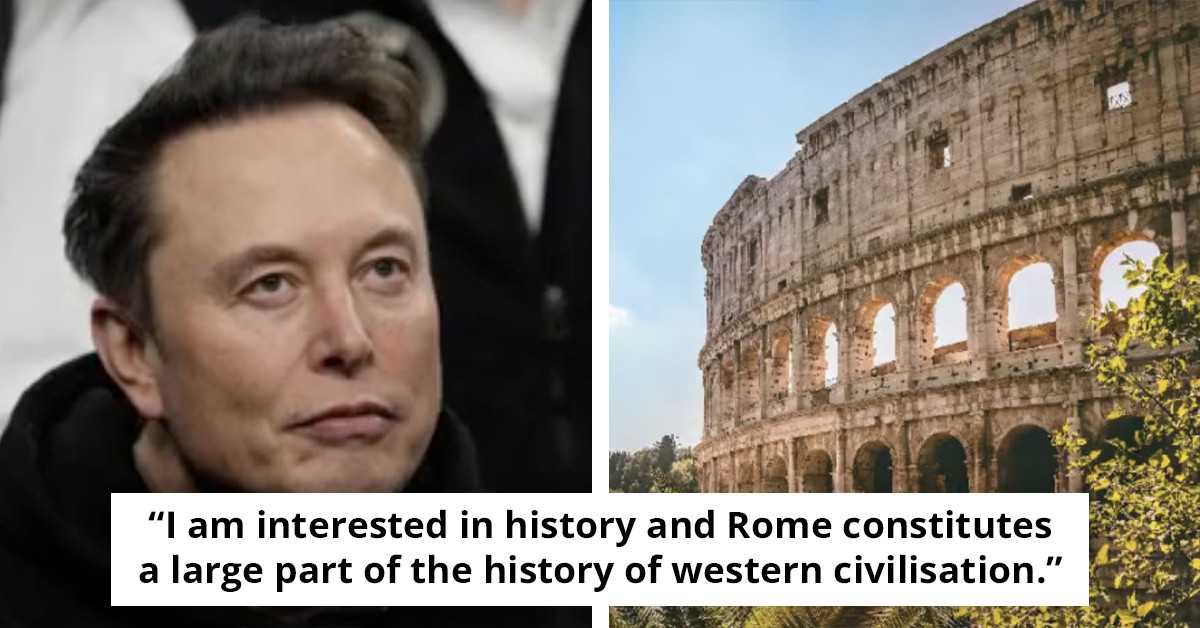
Elon Musk just dropped $1 million into an AI project that could make Ancient Rome feel less like dusty legend and more like a living, breathing place.
The American Institute for Roman Culture (AIRC) is using Musk’s foundation money to push AI-assisted archaeology, and it is not a small tweak. At the Expandere Conscientiae Lumen prize ceremony, 11 projects were honored for blending archaeology with artificial intelligence across Italy, Tunisia, Morocco, and Albania, which is basically the ancient Roman world in map form.
Between AI drones mapping sites that are literally eroding and machine learning decoding pigments in Pompeii’s murals, this could rewrite what we think we know.
The American Institute for Roman Culture (AIRC) received $1 million from Musk’s foundation to lead AI-assisted archaeological research.
The non-profit’s mission is to deepen global understanding of Greco-Roman civilization — and now, with new funding and tech tools, that mission is evolving fast.
At the Expandere Conscientiae Lumen prize ceremony, where the grant was announced, 11 projects were recognized for blending archaeology with artificial intelligence. These projects stretch across Italy, Tunisia, Morocco, and Albania — all regions tied to the ancient Roman world.
One Italian research team is using AI-powered drones and photogrammetry to build ultra-detailed 3D models of Roman and Greek sites. Many of these locations are at risk of disappearing due to climate change and erosion.
Another project is using machine learning to study the pigments in Pompeii’s murals, uncovering clues about ancient trade routes and supply chains.
Speaking via video, Musk shared, “I am interested in history and Rome constitutes a large part of the history of western civilisation.” He believes AI can bridge historical gaps and bring us closer to understanding how the ancient world functioned — from its art to its economics.

And his obsession isn’t exactly new. In 2021, Musk’s X (formerly Twitter) bio declared him the “Imperator of Mars.” In 2023, he mused online that “the main reason Rome won was because they had the best engineering.”
Recently, he wondered aloud if Marcus Aurelius “could have done more to carry Rome to greater heights.”
For archaeologists, his interest could mean more than internet banter. It’s a rare fusion of big tech money and historical curiosity — one that could literally reshape the timeline of civilization.
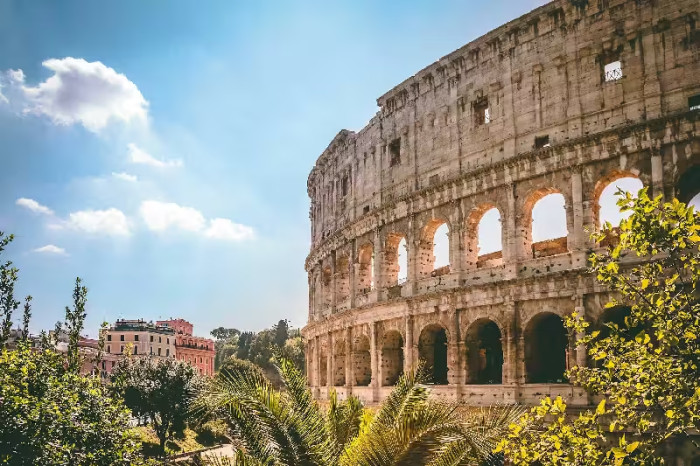 Getty Images
The moment the AIRC grant was announced at the Expandere Conscientiae Lumen prize ceremony, 11 AI archaeology projects suddenly went from “cool idea” to “serious funding.”
One Italian team is already flying AI-powered drones and using photogrammetry to build ultra-detailed 3D models, because climate change is chewing up Roman and Greek locations in real time.
This is also like the mom who thinks it’s wrong to accept her deadbeat dad’s inheritance, after he vanished when he was 6.
History has always depended on fragments — broken statues, worn scrolls, scattered relics. But with AI stepping into the field, those fragments might start talking again. If these projects succeed, our image of Ancient Rome could shift from dusty textbooks to digital reconstructions rich with new detail.
And for Musk, it’s another way of asking a timeless question: what can the past teach us about building the future? Whether it’s rockets or ruins, curiosity remains the common thread.
If this discovery excites you, share it — because history might just be getting its biggest update yet.
Then there’s Pompeii, where another project is using machine learning to study mural pigments, chasing clues about ancient trade routes and supply chains.
AI technology can revolutionize archaeological studies by processing vast amounts of data faster than traditional methods. Research highlights how machine learning algorithms can identify patterns and anomalies in artifacts, leading to previously unnoticed insights about ancient civilizations.
As AI continues to evolve, researchers may uncover new historical narratives, reshaping our understanding of the past. This could enhance educational tools and public engagement in history, making it more accessible to all.
Integrating AI with traditional excavation methods can improve accuracy in reconstructing ancient sites. Using AI-driven modeling can help predict likely locations of undiscovered artifacts based on existing data.
To maximize this potential, collaboration between tech experts and archaeologists is crucial. Regular workshops could enable sharing knowledge, ensuring that both communities effectively leverage these tools while maintaining respect for historical contexts.
As Elon Musk's funding catalyzes this innovative project, experts believe that blending AI with archaeology may indeed rewrite the history of ancient Rome. With the potential to uncover new insights, this collaboration could bridge the gap between technology and historical research.
Engaging interdisciplinary teams will be vital for success. As seen in previous studies, partnerships between technology innovators and historians can foster groundbreaking discoveries, leading to a richer understanding of our past. This project may inspire future initiatives that integrate cutting-edge technology with humanistic inquiry.
If the fragments start “talking” with AI, Ancient Rome might stop being a chapter we recite and start being a story we can actually see.
Talk about a cash fight, read how “I have no right to exclude him” escalated after a friend’s advance payment.

Sophia