
The Oldest Tree in the World Has Been Alive Since Before the Pyramids
A gnarled pine in California sprouted around 2833 BCE and is still alive. Here is how we know, and which trees might be even older.
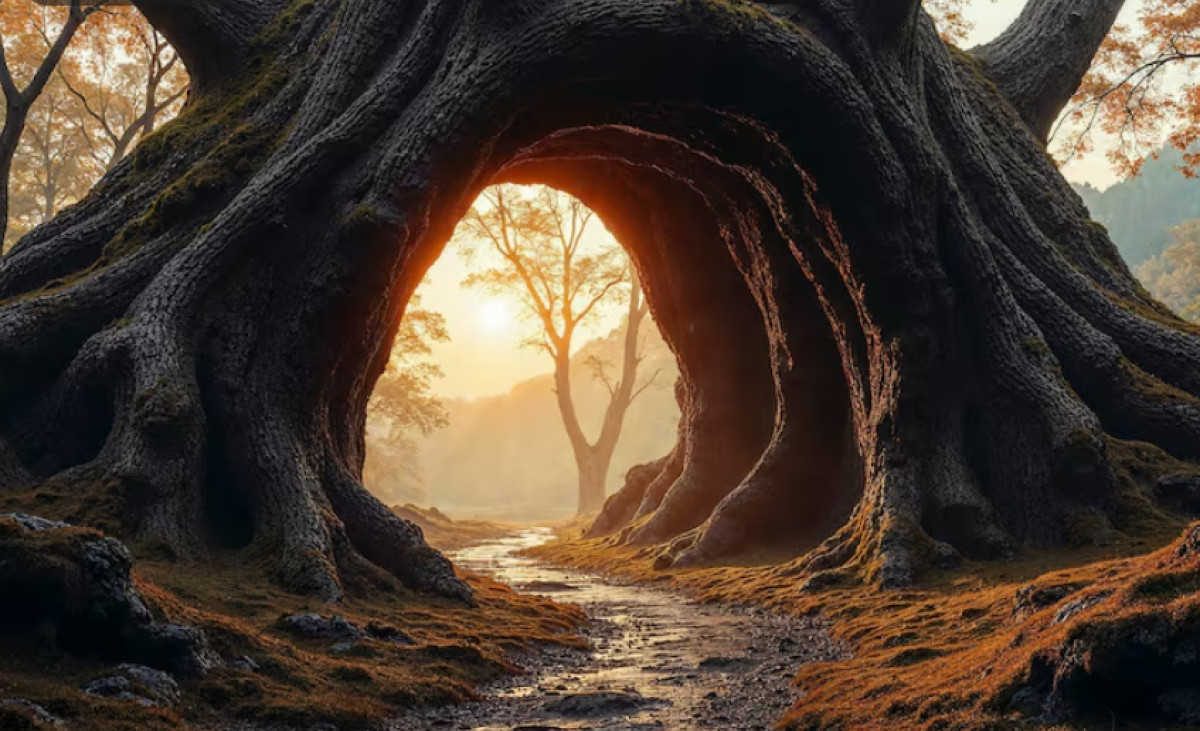
Methuselah is the kind of tree that makes time feel fake. This Great Basin bristlecone pine, Pinus longaeva, is living proof that the world can change completely and one battered trunk still keeps showing up for work.
It was already established when the Giza pyramids rose, around 2560 BCE, meaning it had needles long before anyone was stacking blocks into legends. And it survived in the most unglamorous way possible, clinging to thin air and rocky slopes where rot barely gets a vote. The people chasing its age, from Edmund Schulman in the 1950s to the rumor that turned into a headline, are part of the story too.
But the real twist? The quest to prove how old it is may have involved killing the very thing that could have kept standing.
How Old Is the Oldest Tree in the World?
Methuselah is a Great Basin bristlecone pine, Pinus longaeva, and it is roughly 4,850 years old. The U.S. Department of Agriculture puts its confirmed age at over 4,789 years based on core samples taken in 1957, and later tree-ring work nudges the figure closer to 4,850. Do the math on the germination date and you land around 2833 BCE.
That matters for one reason. According to Conservation International, the tree was well established by the time the Giza pyramids went up around 2560 BCE. A living organism predates the most famous monument of the ancient world, and it is still putting out needles.
Bristlecones do not grow tall or grand. They top out around 50 feet and usually look half-dead, with twisted trunks and bark stripped back to bare wood. That battered look is the secret. These trees survive precisely because their environment is brutal.
They cling to limestone slopes between 9,500 and 10,000 feet, where the air is thin, the soil is poor, and winter never fully lets go. Nothing rots quickly up there. Insects and fungi can barely function. So the wood that would decay in a wet forest within years can stand for millennia in the dry, frozen heights of the White Mountains.
A dendrochronologist named Edmund Schulman found Methuselah in the 1950s. He had spent every summer for over a decade hunting the oldest trees in the United States, often chasing rumors that led nowhere. This time the rumor was real. Schulman published his discovery, and bristlecones became famous overnight.
He died of a heart attack in 1958, at 49. He never saw how big the story would get.
 commons.wikimedia.org
The Tree That Was Killed to Learn Its Age
There is a darker chapter, and it involves a tree that was almost certainly older than Methuselah. In 1964, a graduate student named Donald Currey was studying ice-age climate on Wheeler Peak in Nevada. He wanted a core from an ancient bristlecone the locals called Prometheus.
His boring tool got stuck. What happened next is still debated, but the outcome is not. With permission from the Forest Service, the tree was cut down.
When researchers counted the rings on the stump, they got more than 4,860. Estimates suggest Prometheus may have been at least 4,900 years old, which would have made it the oldest tree ever reliably dated. All that remains is a polished slab in a Nevada visitor center.
The loss did some good. Outrage over Prometheus helped push Wheeler Peak toward national park status and sharpened protections for bristlecones across the country. It also explains why nobody will tell you where Methuselah is. Trophy hunters and vandals are the real threat to a 5,000-year-old tree, so its identity stays hidden.
 commons.wikimedia.org
The Disputed 5,000-Year-Old Bristlecone
Methuselah might not even be the oldest bristlecone in its own grove.
Schulman's notes mention another specimen, and in 2009 the dendrochronologist Tom Harlan said he had dated a tree from the same area at 5,062 years, still alive. On paper, that beats Methuselah by two centuries.
The claim is shaky. Harlan died in 2013, and the original core sample could never be located afterward. No independent team has reproduced the age. So while the 5,062-year tree shows up on plenty of lists, careful scientists still treat Methuselah as the oldest fully documented individual.
A newer challenger sits in Chile. A Patagonian cypress known as Gran Abuelo, or "great-grandfather," could be 500 years older than Methuselah. But its age came from statistical modeling rather than a full ring count, and many experts are not convinced. The title is genuinely up for grabs.
 commons.wikimedia.org
Schulman’s summer-long obsession finally paid off in the 1950s when he confirmed Methuselah, and the bristlecone craze took off fast.
Then the timeline gets even wilder, because Methuselah was already thriving while the pyramids were still being built, around 2560 BCE.
This 4,800-year-old tree’s age makes it feel like an “oldest nations” contest, see the oldest countries in the world.
After Schulman died of a heart attack in 1958, the story didn’t stop, it just shifted to a new target on Wheeler Peak.
Clonal Trees Break Every Record
Here is where the question gets slippery. Ask for the oldest tree and you will get one answer for single, seed-grown trees and a completely different one for clonal trees.
A clonal tree regenerates new trunks from one continuous root system. The trunk you see might be a few hundred years old. The roots underneath could be ancient beyond comprehension.
Old Tjikko is the famous example. It is a scrappy Norway spruce on a windswept Swedish mountainside, and its visible trunk is only a few centuries old. But carbon dating of its root system returned an age of roughly 9,550 years. The organism has been cloning itself, trunk after trunk, since the last ice age was barely over. A geologist named Leif Kullman found it in 2008 and named it after his dog. Then there is Pando.
Pando is a colony of more than 40,000 quaking aspens in Utah's Fishlake National Forest, all genetically identical, all connected by a single root network. As one organism, it has been estimated at around 80,000 years old and weighs more than 6,000 tons, which would make it both the oldest and the heaviest living thing on the planet.
Newer studies argue it may be younger, because dating a clonal colony this way is close to impossible with current tools. Either way, it dwarfs every individual tree.
Old Tjikko and Pando are not even alone. A creosote bush colony in California's Mojave Desert, nicknamed King Clone, has been dated to roughly 11,700 years. A Palmer's oak colony in the Jurupa Mountains, also in California, may exceed 13,000 years, surviving as a low ring of shrubby growth that most hikers would walk straight past. None of them look like the towering ancient tree you picture. That is exactly why they get overlooked.
So which is the real answer? It depends entirely on what you mean by "tree." For a single organism grown from one seed, the record belongs to a California bristlecone. For a continuous living system, the roots win, and they win by tens of thousands of years.
Why Dating the Oldest Tree Is So Hard
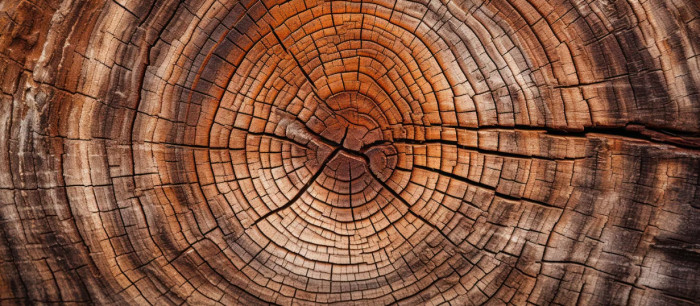
The reason these records keep shifting comes down to method. For slow-growing trees like the bristlecone, there can be as many as 100 rings packed into a single inch of wood. Counting them means slicing a thin core with a hollow borer, then comparing ring patterns under a microscope against other dated samples, a discipline called dendrochronology.
It is painstaking, and it only works where trees actually stop growing each winter. Push into the tropics, where growth never pauses, and the annual rings vanish. There, radiocarbon dating is often the only option, and it is far less precise.
Then there is the hollowing problem. Yew trees are notorious for it. As a yew ages, its center rots away entirely, taking the oldest rings with it. The Llangernyw Yew in Wales and the Fortingall Yew in Scotland both carry age estimates that swing wildly, anywhere from 2,000 to 5,000 years and beyond, precisely because the evidence that would settle the question has decayed. Some of these churchyard trees may quietly outrank Methuselah. We will probably never prove it either way.
Clonal colonies are harder still. You cannot core a root network that has been regenerating for tens of thousands of years and expect a clean count. Scientists fall back on genetics, growth rates, and statistical modeling, which is why an estimate like Pando's 80,000 years comes with such a large margin of doubt. The honest position is that the deeper you go, the fuzzier the numbers get.
 magnific
That’s when Donald Currey’s Prometheus core attempt went sideways, and the “oldest” question turned into something darker.
Other Ancient Trees Around the World
The oldest trees are not all American. They are scattered across continents, each with its own survival trick. Europe's oldest officially dated tree is a Bosnian pine in the mountains of Greece, named Adonis. It took root around 941 AD, which means it was a sapling while Vikings were still raiding European coastlines. At over 1,000 years old, it is ancient by any normal standard and still young compared to the bristlecones.
Giant sequoias play a different game. The oldest known specimens run to roughly 3,200 years, with one cored at about 3,266. They do not rely on harsh conditions to survive. They rely on thick, fire-resistant bark and protected groves, which is a gentler path to old age than freezing on a limestone ridge.
Some ancient trees are gone now. The Senator, a bald cypress in Florida, had stood for around 3,500 years. In 2012 a person hiding inside its hollow trunk lit a fire to see better. The tree burned from the inside like a chimney and collapsed before firefighters could save it. Three and a half millennia, ended by a careless flame.
Yews tell their own confusing story. The Llangernyw Yew in Wales has age estimates ranging from 2,000 to 5,000 years, because yews hollow out as they age and lose the inner rings that scientists count. Without a continuous core, the math turns into guesswork. Some of these churchyard trees may be older than Methuselah. We simply cannot prove it.
Yews tell their own confusing story, as already noted, but they are not the only living relics tied to human history. The Olive Tree of Vouves on the Greek island of Crete is estimated at well over 2,000 years old, possibly far more, and it still produces olives every harvest. Locals have crowned Olympic victors with wreaths cut from trees like it. A living thing that fed and crowned the ancient Greeks is still bearing fruit for their descendants.
What unites all of them is endurance against the odds. Bristlecones survive on starvation rations of nutrients. Sequoias armor themselves against fire. Aspens cheat death by becoming a colony. Different strategies, same result: a living thing that outlasts empires.
Every ring inside these trees holds a year of weather data, which is why dendrochronologists prize them beyond their novelty. The bristlecone record alone stretches the climate timeline back roughly 9,000 years. These trees are not just old. They are archives.
Methuselah, meanwhile, keeps doing what it has done since before recorded history. It grows a little, sheds a little, and waits out another winter on a mountain almost nobody is allowed to find. If you want to see something equally improbable, the Methuselah tree's full story is worth a closer look, as is the bizarre red-sapped Dragon's Blood Tree that survives on an island most people have never heard of.
For the rest of the natural record-holders, the oldest animals on Earth make even a 4,850-year-old pine look like a newcomer, and the oldest mountain ranges push the clock back further still.
The tree survived centuries, but the truth came at a price.
Want the full mystery behind Methuselah, including why the Forest Service won’t share its location?

Damjan