The Most Haunted Places in the World: Castles, Catacombs, and Ghost Towns
Six million skeletons under Paris, a quarantine island Italy won't let you visit, and a fort where the government bans tourists after dark.
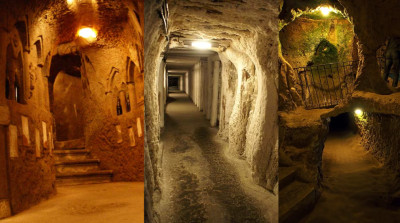
Paris turned grief into architecture. When the city’s cemeteries got so packed that bodies were breaking through into neighboring basements, they didn’t pause, they dug. The solution was a slow, grim relocation into abandoned limestone quarries under the streets, and the result is a maze that still feels like it’s breathing.
But the Catacombs are only the tip of the iceberg. On Poveglia Island, Italy has kept visitors off the shore, even as plague history, burned remains, and a mental asylum legend about a doctor who may have jumped from a bell tower keeps circulating. Then London piles on the body count, with execution sites like Tower Green and sightings tied to Anne Boleyn, Lady Jane Grey, Guy Fawkes, and the vanished princes.
And just when you think the horror is all in the past, Bran Castle in Romania shows how legends travel, sticking to a place even when the author never stepped inside.
The Paris Catacombs, France
The bones came from above. By the late 1700s, Parisian cemeteries were so overcrowded that bodies were pushing through cellar walls into neighboring homes. The city's solution was to empty the graveyards into abandoned limestone quarries beneath the streets. The transfer took decades.
Today the official Catacombs of Paris museum opens only a small fraction of the network, and the rest is illegal to enter. Urban explorers go anyway. Some have gotten lost in the dark down there and never come back out.
 commons.wikimedia.org
Poveglia Island, Italy
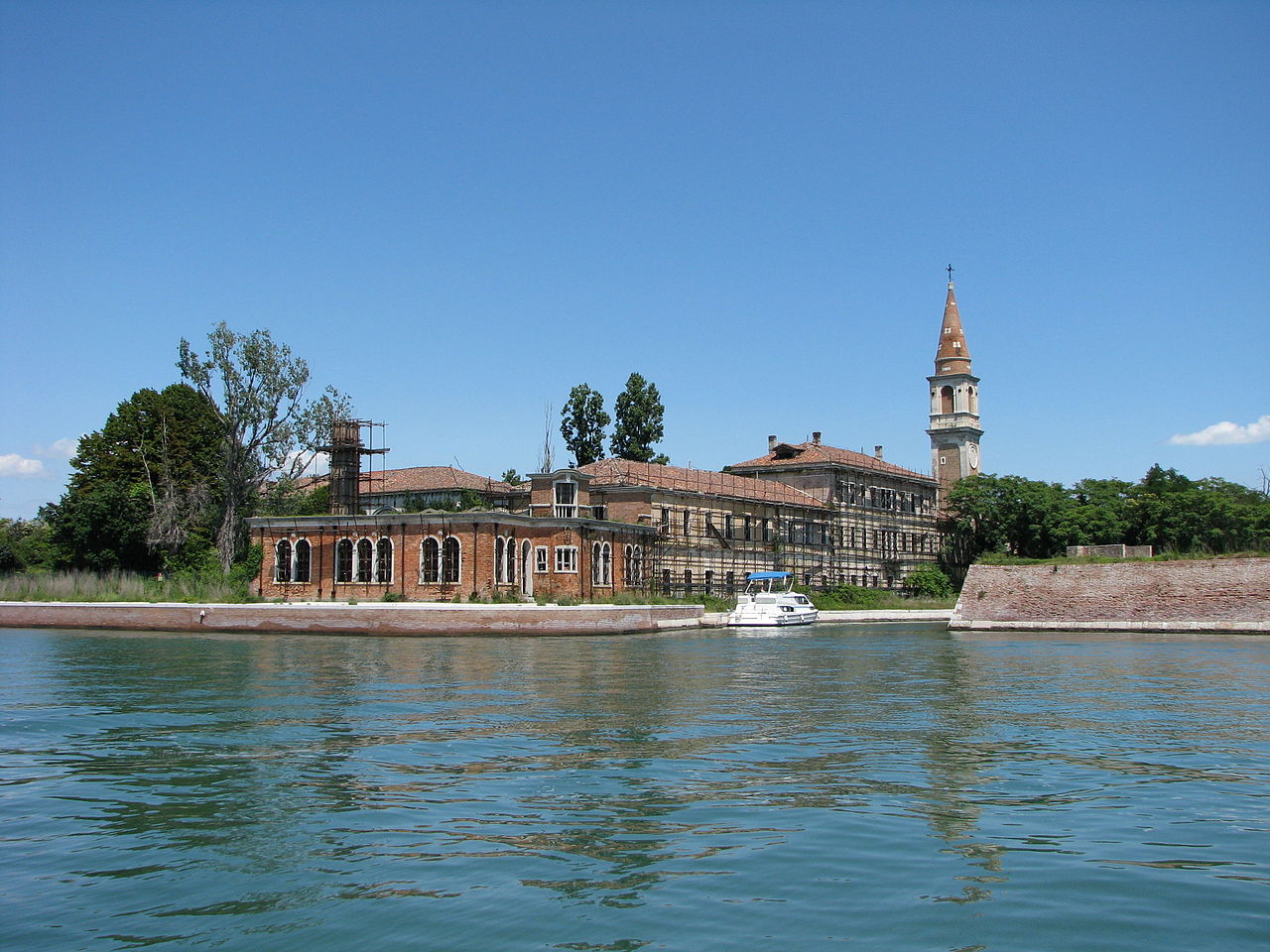
A short boat ride from Venice sits a small island that Italy has effectively shut. Poveglia served as a quarantine station during plague outbreaks, and local lore holds that the soil is half ash from the bodies burned there. In 1922 it became a mental asylum.
The legend, repeated for a century, says a doctor performed crude experiments on patients before throwing himself from the bell tower, claiming the spirits of the island had driven him mad.
Whether the doctor was real or invented, the history of Poveglia Island is grim enough without embellishment, and tourists are not permitted to land.
 commons.wikimedia.org
The Tower of London, England
Nine hundred years of executions leave a mark. Anne Boleyn was beheaded on Tower Green in 1536, and visitors and guards at the Tower of London have reported a headless figure in Tudor dress ever since. She has company.
Lady Jane Grey, Guy Fawkes, and the two young princes who vanished in the 1480s all feed the Tower's standing as the most haunted building in Britain.
She is the famous one. The Tower has dozens.
 commons.wikimedia.org
Bran Castle, Romania
Bram Stoker never set foot in Romania. He built Dracula's castle out of a few secondhand descriptions and a lot of imagination, and Bran Castle in Transylvania happened to match them closely enough that it inherited the legend permanently.
The real history is its own kind of dark, tied to Vlad the Impaler, a 15th-century ruler whose preferred method of execution earned his name. The vampire is fiction. The village folklore about restless spirits is older than Stoker, and it never needed a novel.
 commons.wikimedia.org
Bhangarh Fort, India
India's Archaeological Survey posts an official sign at Bhangarh Fort forbidding entry between sunset and sunrise. That alone makes it unusual. Built in the 1500s in Rajasthan, the fort sits at the center of a curse legend involving a sorcerer and a princess who rejected him.
Visitors during daylight report a heavy, watched feeling. Nobody is permitted to test what the ruins are like after dark, and the government has never fully explained why the rule exists.
 commons.wikimedia.org
The Bone Collectors: Sicily and the Czech Republic
Two places in Europe took human remains and turned them into something deliberate. In Palermo, the Capuchin Catacombs hold around 8,000 bodies, many mummified and still dressed, propped upright along the corridors.
The friars discovered in the 1500s that the dry crypt naturally preserved the dead, and aristocrats began requesting burial there. The other sits in the Czech Republic, where the Sedlec Ossuary arranged the bones of tens of thousands of people into chandeliers, garlands, and a coat of arms.
Both are churches. Both are decorated entirely with the dead.
 commons.wikimedia.org
Châteaux, Forests, and the European Ghost Story
Europe industrialized the haunted house long before America did. France alone offers Château de Brissac in the Loire Valley, home to the "Green Lady," a murdered noblewoman whose moaning is reported in the tower room, her face described as holes where the eyes and nose should be.
Underground spaces carry the same weight. Beneath Turkey's Cappadocia region, the abandoned underground city of Derinkuyu could shelter thousands and sat empty for centuries, a silent warren cut by hand into soft rock. Empty does not mean peaceful.
 commons.wikimedia.org
Edinburgh, Scotland
Few cities are built so literally on top of their dead. Greyfriars Kirkyard holds the Covenanters' Prison, a section tied to the "Mackenzie Poltergeist," blamed for hundreds of documented incidents since the late 1990s, from scratches to fainting visitors.
Beneath the Old Town, the South Bridge Vaults housed the city's poorest residents in lightless stone chambers until disease and crime emptied them. Both are part of the same grim arithmetic. A medieval city, centuries of plague, and very little room to bury anyone with dignity.
 commons.wikimedia.org
While Paris quietly shuffled bones into limestone darkness, Poveglia was doing its own version of “relocation,” turning a quarantine island into a place people still refuse to visit.
That “doctor” who starved patients in the Washington woods makes the catacombs’ grim transfer feel even darker, in the case of the fake doctor who never let them leave.
Even Anne Boleyn’s headless sightings on Tower Green did not “solve” anything, because the Tower’s lineup includes Lady Jane Grey, Guy Fawkes, and the two young princes who vanished in the 1480s.
Abandoned and Left Behind
Some of the world's most haunted places earned it by being emptied out and left to rot.
Port Arthur, Tasmania was a 19th-century penal colony where more than 1,000 people died, and where psychological punishment was the specialty.
 commons.wikimedia.org
Lawang Sewu in Indonesia, the "House of a Thousand Doors," passed from Dutch railway headquarters to Japanese occupiers during World War II. Its basements are the part people fear.
 commons.wikimedia.org
Old Changi Hospital in Singapore was used as a prison and reported torture site during the occupation.
 commons.wikimedia.org
And if you think that’s where the legend ends, Bran Castle proves it can spread anyway, since Dracula’s myth stuck to Transylvania so hard it feels like history wrote the script.
The pattern repeats across continents. War, neglect, and a building nobody wanted to use again. The same forces produced Italy's hollowed-out hilltop town of Craco, the sand-swallowed diamond ghost town of Kolmanskop in Namibia, and Germany's crumbling Beelitz sanatorium, a military hospital where a young Adolf Hitler once recovered from a leg wound.
Why the Whole World Is Haunted
Look closely and the recipe never changes. A place where a lot of people died, often badly. A history written down and remembered. And enough quiet and decay afterward that the human brain, standing alone in a cold room, fills the silence with whatever it fears most.
The ghosts are debatable. The graveyards, the asylums, and the bones are not. They are still there, and most of them will outlast everyone reading this.
Some places don’t just hold the dead, they keep the story running.
Paris’s illegal catacomb explorers are nothing compared to the prisons, asylums, and plantation where the dead reportedly never checked out, in these most haunted places in America.