John Henry: The Man Who Raced a Machine and Won
He outdrilled a steam-powered machine with a hammer in each hand, then collapsed at the finish. For a century, nobody knew if he was real. A historian found hi
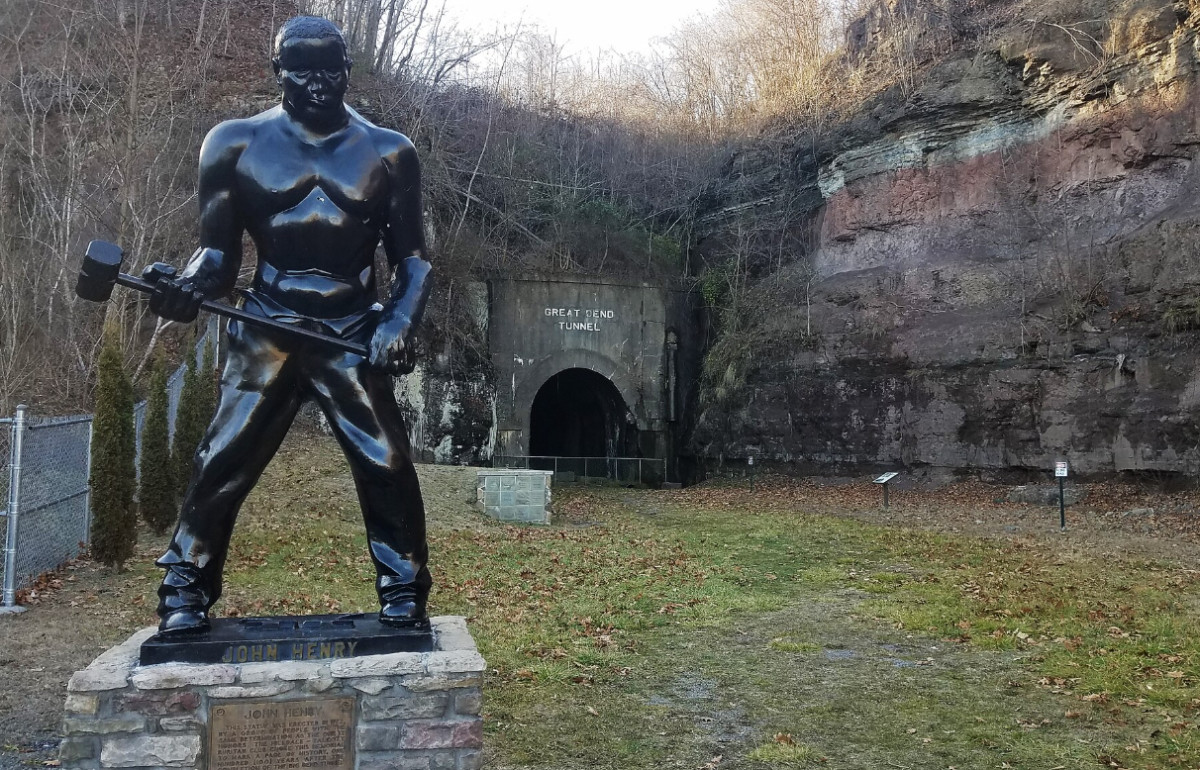
John Henry is the kind of folk hero who sounds bigger than life, because the legend says he could out-hammer a steam drill and still collapse in victory, hammer in hand. It is a story that turns hard labor into something mythic, like the mountain itself is daring him to prove a point.
But the complication is that the “contest” was never just about grit. In the ballad, his mother hears a prophecy, his crew needs him, and the bosses choose the machine because it does not get paid, sick, or tired. Underneath that, the real-life John Henry is tied up in the post-Civil War trap of Black Codes, a theft conviction, and a prison system that leased men out as cheap tunnel labor.
So when you hear “steel drivin’ man,” you are not only hearing a race, you are hearing how freedom and survival got welded to the same hammer.
The Legend
The ballad is simple and devastating. John Henry is a steel driver, one of the strongest men on the railroad, whose job is to hammer a steel drill deep into solid rock so explosives can be packed into the holes and the mountain blasted open. In the song, he even has a prophecy of it as an infant, telling his mother that a hammer will be the end of him.
Then the machine arrives. A salesman brings a steam-powered drill and claims it can out-work any man alive. The bosses want it, because a machine does not need wages and does not get sick. John Henry, defending his crew and the dignity of human labor, challenges the drill to a contest. A hammer in each hand, he drills faster and deeper than the machine, and wins, a contest that reads today like one of the scariest folk legends America produced.
And then his heart gives out. He collapses at the finish with the hammer still in his grip, victorious and gone in the same moment. In the ballad's most quoted line, he declares that a man is nothing but a man, and he would rather work himself to the end than be beaten by an engine.
The story hits the recurring beats of American folk legend:
- A supernatural strength established from birth
- A doomed contest against overwhelming odds
- A victory that costs everything
- A wife, often called Polly Ann, who picks up his hammer and drives steel herself
 commons.wikimedia.org
The ballad frames John Henry as a prophecy kid with a hammer in each hand, but the moment the drill salesman shows up, the whole thing starts sounding like a business decision.
The bosses want the steam-powered drill because it does not need wages, and that is when John Henry’s challenge turns into a fight for his crew’s dignity.
The Man
Nelson's detective work, laid out in his book Steel Drivin' Man, assembled a very different portrait from census data, penitentiary ledgers, and railroad records the company thought had burned.
The real John Henry was likely born enslaved in the 1840s and freed after the Civil War. Caught in the web of Virginia's Black Codes, laws designed to re-criminalize freed Black men, he was convicted of theft in 1866 and sentenced to ten years in the Richmond Penitentiary. Prisons of the era leased convicts out as cheap labor, and John Henry was sent to drive steel on the Chesapeake and Ohio Railroad's tunnels through the Appalachians.
The work was among the deadliest in America. Men labored in choking dust and smoke, and hundreds died from blasting accidents, falling rock, and silicosis, the lung disease from breathing rock dust that the workers called tunnel sickness.
The West Virginia Encyclopedia notes the contractor at Big Bend Tunnel likely did import a steam drill and may well have staged a contest between it and his best hammer man. A real John Henry probably did beat the machine. What most likely ended his life was not a single burst of effort but the dust in his lungs, the same thing taking the men around him.
The two candidate tunnels, Big Bend in West Virginia and Lewis Tunnel in Virginia, both sit in the same mountains that produced so much of Appalachian folklore, and both claim him.
That “machine beats man” showdown echoes the three-wheeled 1885 car that crashed into a wall on its first public drive.
Why the Song Refused to Die
John Henry became the most recorded folk song in American history, and the reason is that it kept meaning new things to new people.
To the railroad workers who first sang it, the hammer songs set the rhythm of the swing and carried a warning: the versions sung slowly, at working pace, repeat that the hammer that got John Henry will not get me. Slow down or die. It was a labor protest disguised as a work song, reminding men not to kill themselves matching an inhuman pace.
From there it spread everywhere. The blues musician W. C. Handy printed an early score. Carl Sandburg used it to help invent the idea of the American folk singer. The Communist Party adopted John Henry as the ideal worker; the Civil Rights Movement embraced him as a symbol of Black strength and dignity under a system built to crush it.
He even seeded superheroes, part of the lineage behind characters like Superman and the DC hero Steel, whose civilian name is John Henry Irons.
There is even a medical term. John Henryism, coined by a public health researcher in the 1970s, describes the toll of fighting relentless stress and discrimination through sheer sustained effort, pushing so hard against an unfair system that the body pays for it. The name fits the story exactly.
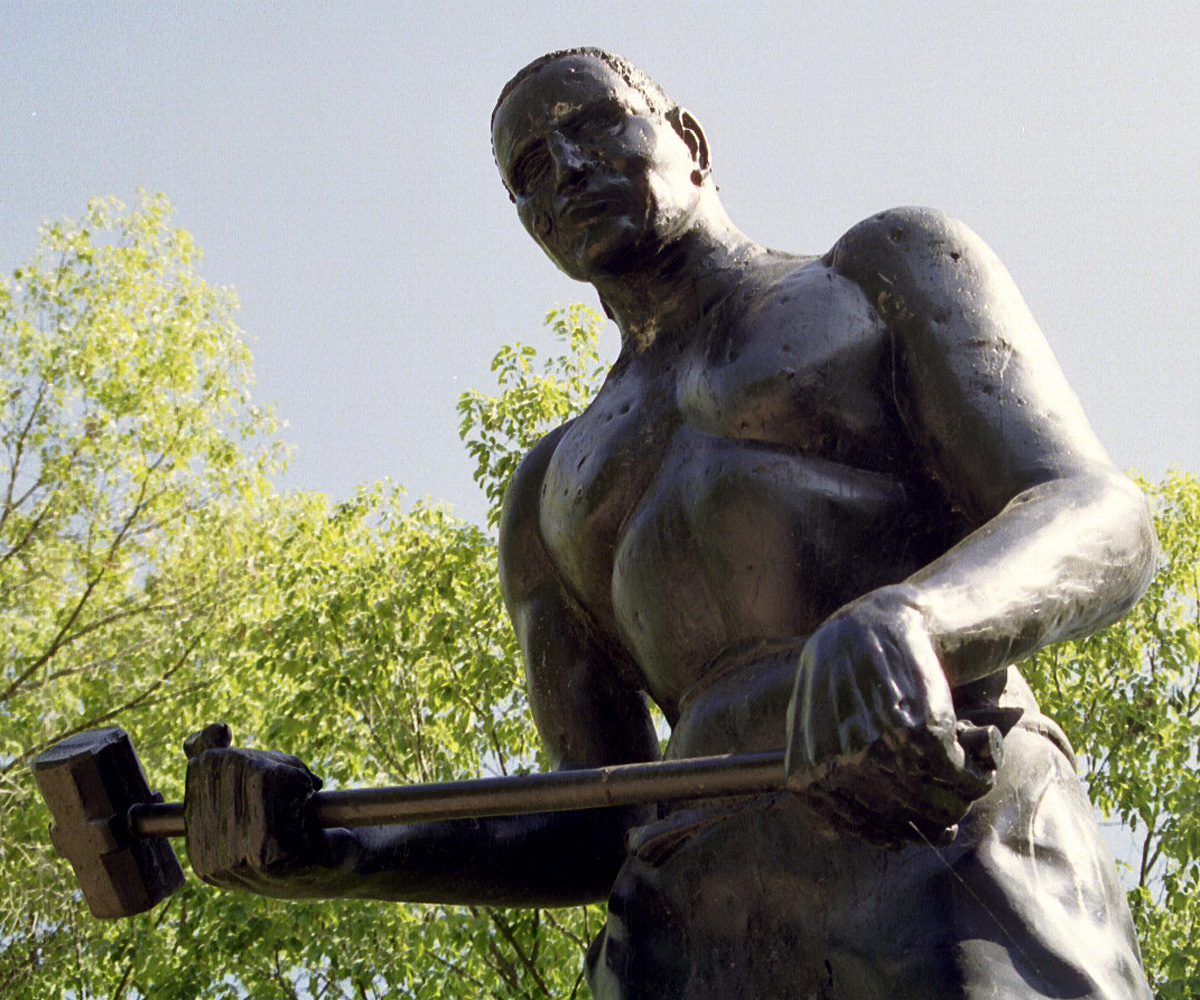 commons.wikimedia.org
After the victory line about “a man is nothing but a man,” the story pivots to the paperwork, where John Henry likely got caught in Virginia’s Black Codes and sentenced to Richmond Penitentiary.
From there, the tunnel jobs on the Chesapeake and Ohio Railroad through the Appalachians make the “race” feel less like a game and more like what the system forced him to endure.
The Machine Always Comes
The deepest reason John Henry endures is that his contest never stopped being current. He is the human worker facing the machine that will replace him, and every generation meets a new version of that machine. The steam drill became the assembly robot, the assembly robot became the algorithm, part of the long arc from 1980s technology to the automation debates of today.
John Henry wins and dies, and the ambiguity is the whole point. He proves a human can beat the machine, and he proves what it costs, and the machine wins anyway, because the next morning there is another steam drill and no more John Henry. His victory is real and useless at once, which is why the song never resolves into simple triumph or simple tragedy.
The music kept his name alive the way ballads have always preserved folk heroes and legends, long after the tunnels were dug and the men who dug them were forgotten. A convict leased to a railroad, worked in lethal dust, became the enduring American symbol of the worker against the machine, his name outlasting the ghost towns and ruins the railroads left behind. He beat the drill. The mountain, and the century, remembered.
Read next in this series:
- Appalachian Folklore: The Strangest Beliefs From America's Oldest Mountains
- Famous Myths From Around the World That People Still Get Wrong
He won the drill race, but the real tragedy is that he was never actually allowed to lose on his own terms.
Then argue with us about the left-handed kid who played a right-handed guitar upside down.

Damjan