Am I Wrong for Refusing to Taste Partners Christmas Dish After Criticism?
AITA for refusing to try my partner's Christmas dish after criticism of my cooking? Tensions rise at dinner - is respect a two-way street?

A 28-year-old woman refused to taste her partner’s Christmas pudding after he turned last year’s dinner into a running critique. And honestly, it’s the kind of petty holiday moment that spirals fast, because it’s not really about pudding, it’s about respect.
OP and her boyfriend Jeremy, 30, have been together three years, and they always host Christmas dinner for their friends. Jeremy is the “amazing cook” type, but last year he loudly complained that her roasted vegetables were too salty and her gravy was too thin. This year, when his new traditional Christmas pudding came out too dry, he complained about it in front of everyone, pointing out the texture and flavor like the table was his personal tasting panel.
When he then asked her to try it at dinner, her refusal was the last spark in a very specific holiday argument.
Original Post
So I'm (28F) and my partner (30M) Jeremy have been together for three years and we always host a Christmas dinner for our friends. Jeremy is an amazing cook and prides himself on his dishes.
This year, he decided to try a new recipe for a traditional Christmas pudding. Unfortunately, it didn't turn out as he expected, and it ended up being a bit too dry.
For background, I love cooking and put a lot of effort into preparing a variety of dishes for our guests. However, Jeremy made a few comments about how my roasted vegetables were too salty and my gravy was too thin last year, which hurt my feelings.
This year, when Jeremy's Christmas pudding didn't meet his standards, he made a big deal about it in front of our friends, complaining about the texture and flavor. I felt a bit hurt because I always support him in his cooking endeavors, even when things don't turn out perfectly.
During dinner, when he asked me to try his Christmas pudding, I politely declined, feeling hurt by his previous comments and lack of appreciation for my cooking efforts. It led to a bit of tension between us, and he's upset that I didn't try his dish.
So AITA?
Communication is Key
Simple phrases like 'I appreciate your efforts, but I prefer...' can help maintain a positive atmosphere and encourage mutual respect.
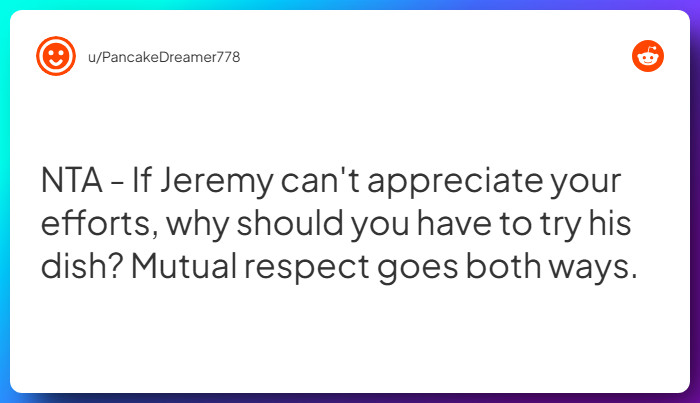
Comment from u/PancakeDreamer778
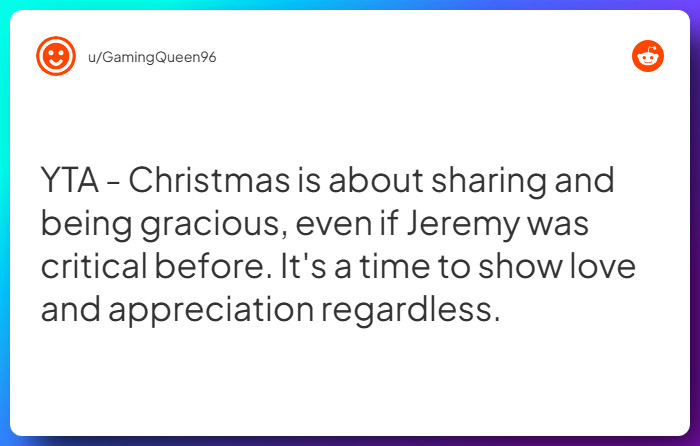
Comment from u/GamingQueen96
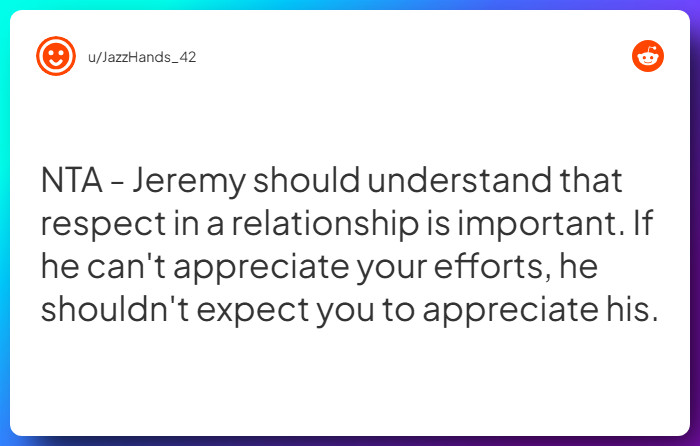
Comment from u/JazzHands_42
Right after Jeremy publicly complained about his dry pudding, OP had to sit there while he acted like his standards were the only ones that mattered.
The situation presented by the Redditor reveals the complexities that can arise in relationships, particularly during the holiday season when expectations are high. The woman's refusal to taste her partner's Christmas dish after receiving criticism underscores a deeper issue of communication and unspoken rules that often govern culinary interactions within couples. This story illustrates how a lack of such guidelines can lead to misunderstandings and hurt feelings. Instead of fostering an environment of collaboration, the couple finds themselves in a cycle of conflict. By focusing on expressing feelings without assigning blame, partners can create a space where both can share their culinary creations and criticisms constructively, ultimately enhancing their connection during a time meant for celebration.
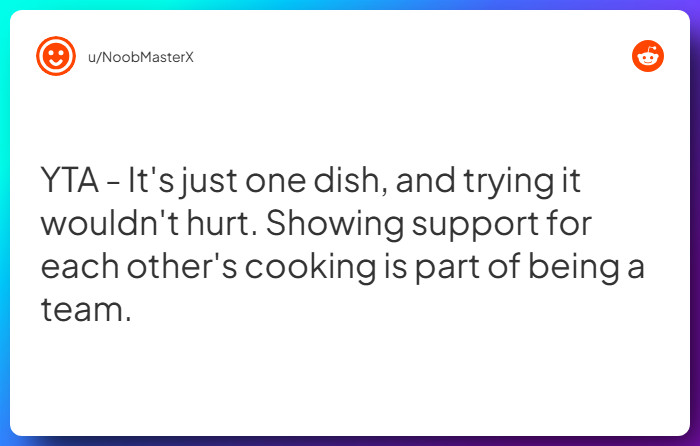
Comment from u/NoobMasterX
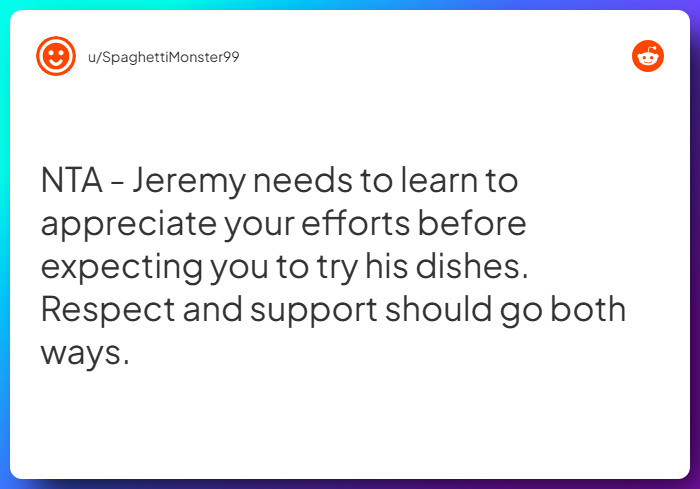
Comment from u/SpaghettiMonster99
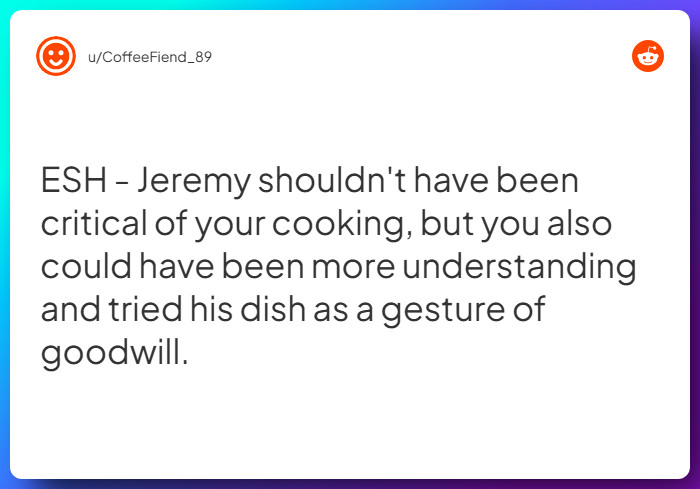
Comment from u/CoffeeFiend_89
Last year’s salty vegetables and thin gravy comments are still fresh in OP’s head, so his “try this” request lands way colder than it should.
This feels like the OP who left a $0.25 tip and a rude note after terrible service and food.
The tension at the Christmas dinner table highlights a crucial aspect of communication in relationships.
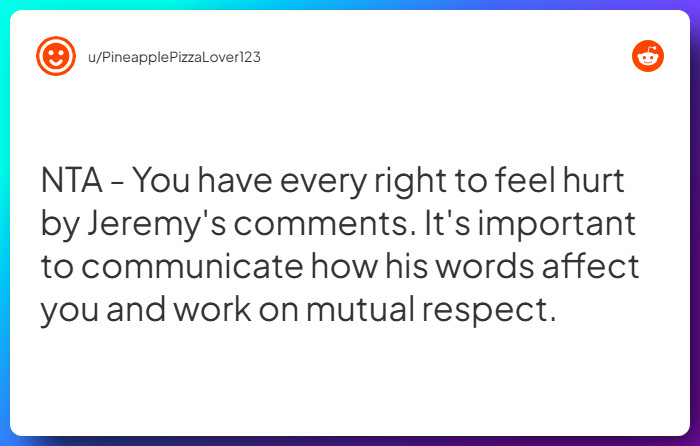
Comment from u/PineapplePizzaLover123
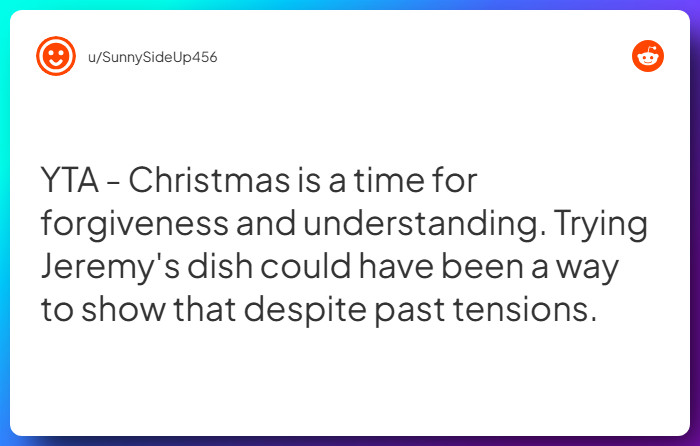
Comment from u/SunnySideUp456
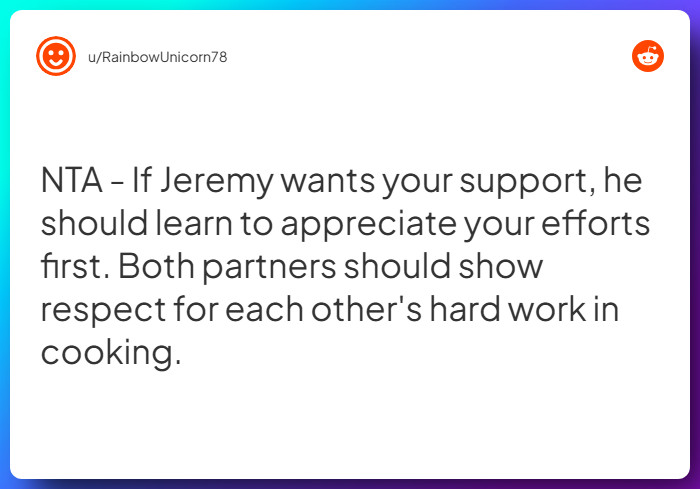
Comment from u/RainbowUnicorn78
The tension spikes in the middle of dinner, because OP is trying to protect her feelings while Jeremy is acting personally offended that she won’t participate.
Emotional responses during conflict often stem from underlying vulnerabilities.
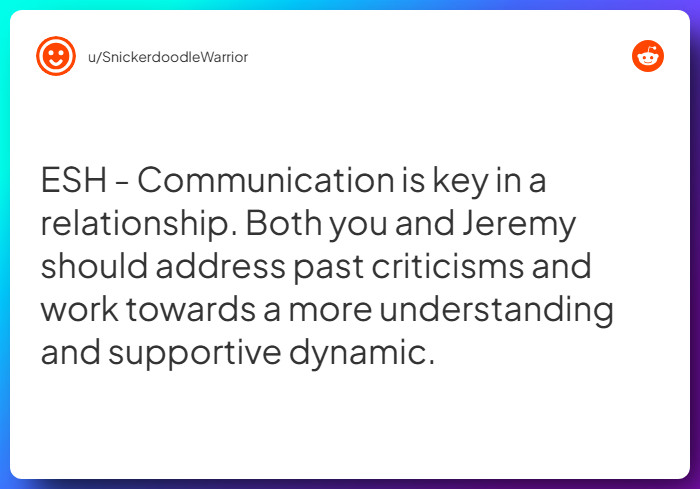
Comment from u/SnickerdoodleWarrior
Now Jeremy is upset that she refused to taste his dish, and OP is stuck wondering if she’s being unfair or just done getting criticized.
How would you handle this situation? Let us know in the comments.
In this holiday season narrative, the importance of open communication and mutual respect comes to the forefront.
This scenario underscores the intricate dynamics of communication within relationships, particularly during shared experiences like preparing a holiday meal. The woman's decision to refuse to taste her partner's Christmas dish after feeling criticized exemplifies how sensitivity can escalate into defensiveness and resentment. Such a reaction can create a cycle of hurt, detracting from the joy of the occasion. To avoid these pitfalls, it is crucial for couples to cultivate a nurturing atmosphere where feedback is delivered constructively and appreciation for each other's efforts is openly communicated. This approach not only prevents misunderstandings but also fortifies their connection during what is meant to be a festive celebration.
Now he’s wondering if he really is the problem, and the family dinner did not end well.
Still unsure about “being nice,” check out the AITA fight over tipping $0.25 after 2+ hours.

Stephanie